Best Gaming Headsets 2026
The best gaming headsets of 2026, from audiophile-grade wireless to budget-friendly picks that punch above their weight. Expert picks, pros and cons, and sid...
As an Amazon Associate we earn from qualifying purchases made through our links — this doesn't affect our picks.
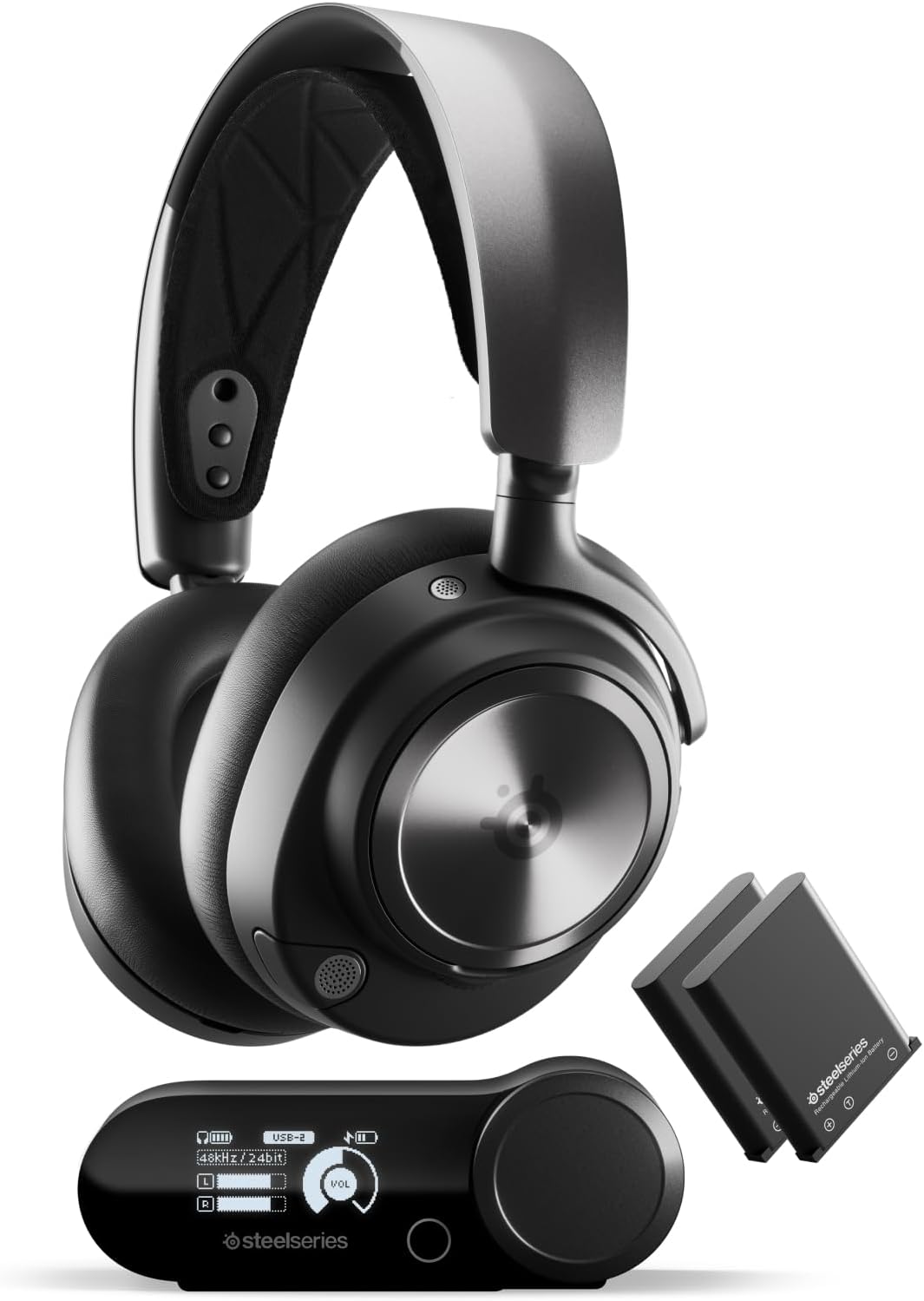
SteelSeries Arctis Nova Pro Wireless
Our top recommendation for this category
Price as of Feb 15, 2026 — see current price on Amazon.
In this guide
- Our top picks at a glance
- Best overall: SteelSeries Arctis Nova Pro Wireless
- Best sound quality: Audeze Maxwell
- Best battery life: HyperX Cloud Alpha 2 Wireless
- Best value: Razer BlackShark V2 Pro (2023)
- Best for esports: Logitech G Pro X 2 Lightspeed
- Best open-back: Turtle Beach Atlas Air
- What to look for in a gaming headset
- The verdict
Gaming headsets have split into two very different camps. On one side you've got the audiophile crossovers, planar magnetic drivers, lossless wireless, the kind of sound that makes you forget you're wearing a gaming product. On the other, battery life wars have gotten genuinely absurd, with some headsets lasting longer than a transatlantic flight. Both camps have strong entries right now, and figuring out which tradeoffs matter to you is half the battle.
Here's what I'd grab in 2026.
Our top picks at a glance
| Headset | Type | Battery | Driver | Price | |
|---|---|---|---|---|---|
| SteelSeries Arctis Nova Pro Wireless | Closed-back wireless | 44h (hot-swap) | 40mm Neodymium | $310 | Check Price |
| Audeze Maxwell | Closed-back wireless | 80h | 90mm Planar Magnetic | $300 | Check Price |
| HyperX Cloud Alpha 2 Wireless | Closed-back wireless | 250h | 53mm Dual Chamber | $230 | Check Price |
| Razer BlackShark V2 Pro (2023) | Closed-back wireless | 70h | 50mm Triforce Titanium | $130 | Check Price |
| Logitech G Pro X 2 Lightspeed | Closed-back wireless | 50h | 50mm Graphene | $230 | Check Price |
| Turtle Beach Atlas Air | Open-back wireless | 50h | 50mm | $130 | Check Price |
Best overall: SteelSeries Arctis Nova Pro Wireless
SteelSeries Arctis Nova Pro Wireless
Pros
- Hot-swappable batteries eliminate downtime
- Active noise cancellation with transparency mode
- OLED base station for multi-system switching
- Sonar software with parametric EQ is genuinely powerful
Cons
- $310 is a lot for a gaming headset
- ANC doesn't match Sony or Bose levels
- Stock earpads run warm during long sessions
Price as of Feb 15, 2026 — see current price on Amazon.
The Arctis Nova Pro Wireless is the headset other manufacturers are chasing. SteelSeries solved the wireless battery anxiety problem by giving you two batteries and a base station that charges the spare while you game. When one dies, pop it out, slide in the fresh one, keep going. Zero downtime.
The OLED base station handles multi-system switching between your PC and console with a button press, manages EQ profiles, and controls ChatMix balance without alt-tabbing. It's the kind of convenience feature that feels unnecessary until you've used it, then you can't go back.
Sound quality sits in the upper tier of gaming headsets. The 40mm drivers are tuned for gaming out of the box, footsteps are crisp, explosions have weight, and the soundstage is wide enough to pinpoint directional audio reliably. Where SteelSeries really pulls ahead is software: Sonar's parametric EQ is a first for gaming headsets and lets you dial in exactly the frequencies you want to boost. The built-in game profiles for titles like Valorant and CS2 are legitimately useful, not just marketing fluff.
ANC is solid but not class-leading. It'll knock out your keyboard clicks and your air conditioner, but a loud room will still bleed through. Transparency mode works well enough for grabbing a quick conversation without removing the headset.
The main complaints are the price and the stock ear cushions. At $310, you're paying a premium, but you're getting the most feature-complete wireless gaming headset on the market. The leatherette pads trap heat after a couple hours; aftermarket fabric replacements fix this for about $30.
Best sound quality: Audeze Maxwell
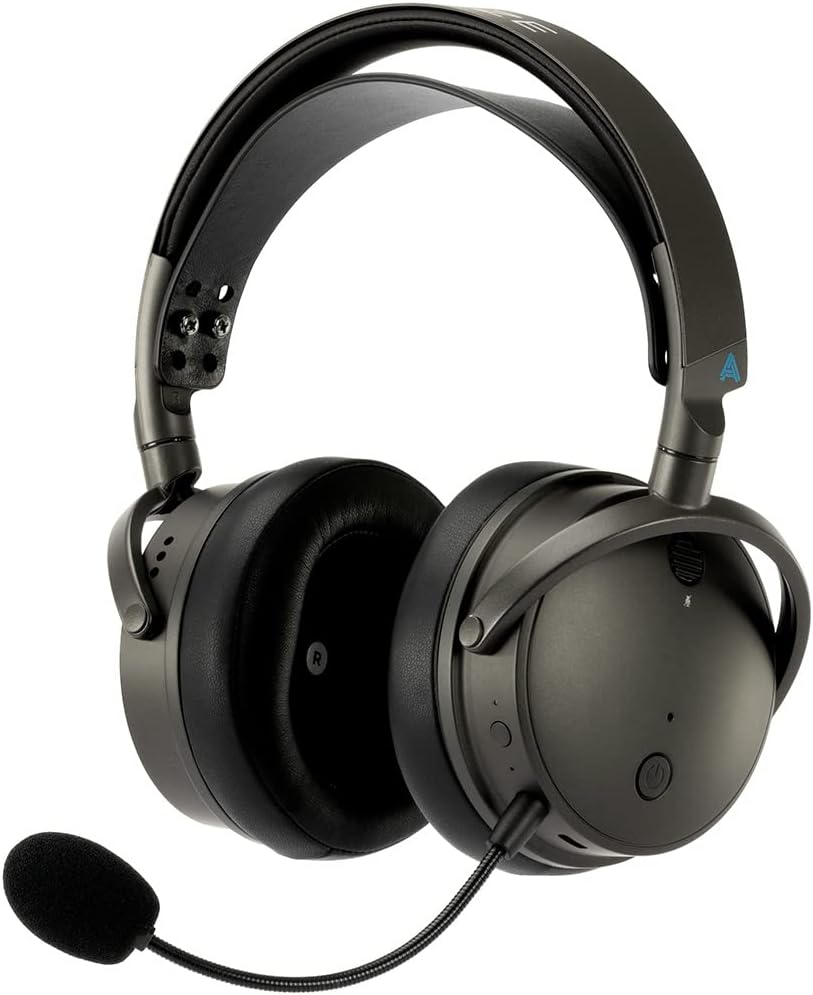
Audeze Maxwell Wireless
Pros
- 90mm planar magnetic drivers deliver audiophile-grade sound
- 80+ hour battery life on wireless
- Works across PC, PlayStation, Switch, and mobile
- Audeze HQ app for detailed EQ tuning
Cons
- Heavy at 490g, you'll feel it after a few hours
- No active noise cancellation
- Boom mic is decent but not broadcast quality
Price as of Feb 15, 2026 — see current price on Amazon.
If sound quality is your non-negotiable priority, the Audeze Maxwell leaves everything else in the dust. Those 90mm planar magnetic drivers are the same technology Audeze uses in their $1,500+ audiophile headphones, scaled and tuned for gaming. The difference in audio fidelity compared to typical dynamic driver gaming headsets is immediately noticeable, instruments have separation, bass is tight without being bloated, and spatial cues in games feel three-dimensional rather than just "left or right."
Battery life is remarkable at 80+ hours on 2.4GHz wireless, and a 20-minute charge gets you through a full day of gaming. Connection options are the other draw. Maxwell handles 2.4GHz dongle, Bluetooth, and USB-C simultaneously, so switching between your PC and phone for Discord calls is seamless.
The tradeoff is weight. At 490 grams, these are noticeably heavier than most competitors. The headband distributes it well, but after 3-4 hour sessions, you'll feel it. There's also no ANC, which at this price point feels like a miss, though the closed-back design provides decent passive isolation.
The Maxwell 2 recently launched with improved spatial audio (SLAM technology) and better mic processing. If you can find the original Maxwell on sale, it's arguably the better value. Either way, nothing in the gaming headset space touches these for pure audio quality.
Best battery life: HyperX Cloud Alpha 2 Wireless
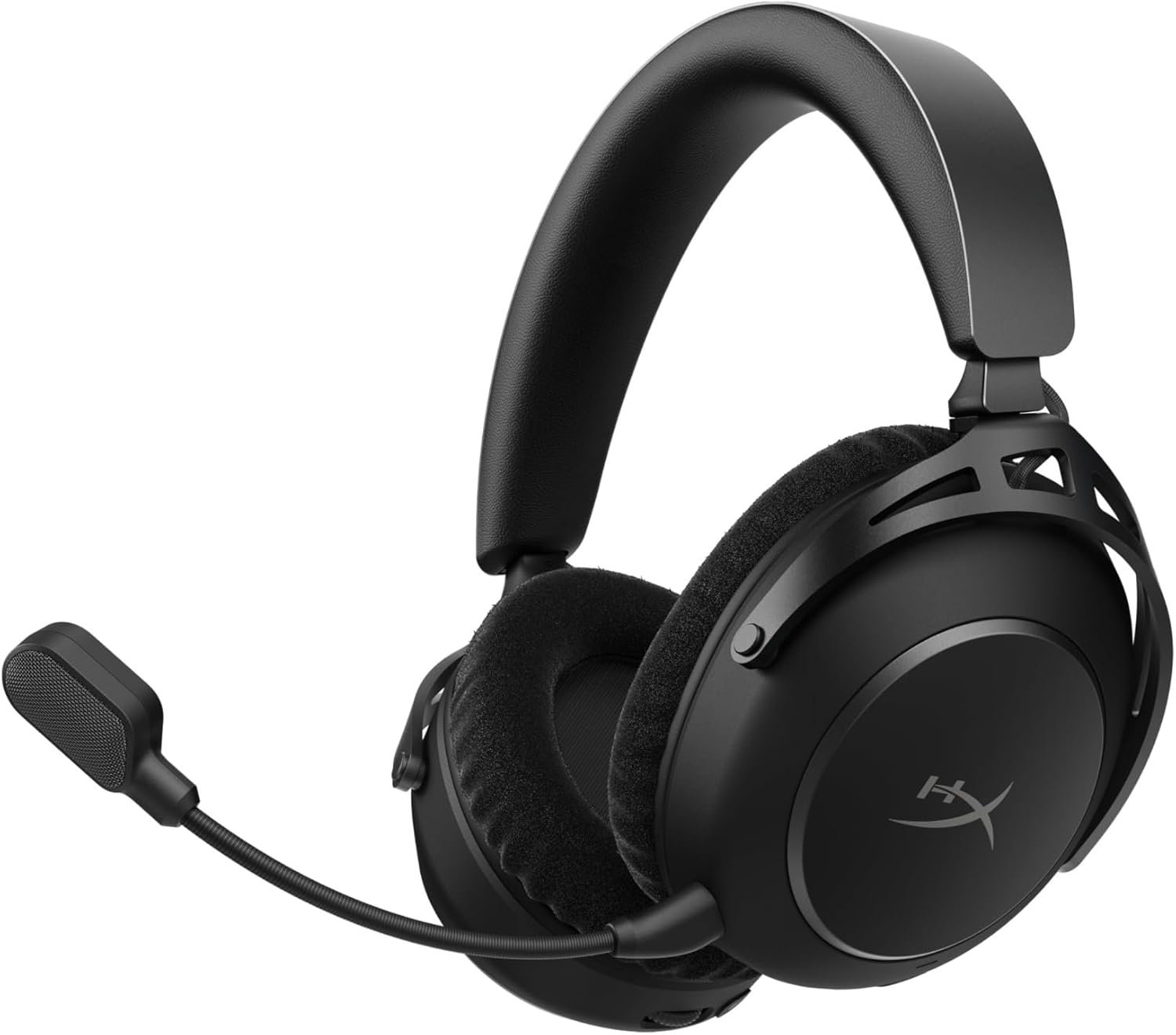
HyperX Cloud Alpha 2 Wireless
Pros
- 250 hours of battery life, not a typo
- Simultaneous 2.4GHz and Bluetooth connectivity
- RGB charging base station included
- Dual-chamber driver design reduces distortion
Cons
- Mic quality hasn't improved much from the original
- Heavier than the first Cloud Alpha Wireless
- Software EQ options are limited compared to SteelSeries
Price as of Feb 15, 2026 — see current price on Amazon.
HyperX broke battery records with the original Cloud Alpha Wireless at 300 hours. The Cloud Alpha 2 trades a bit of that (down to 250 hours) for simultaneous dual-wireless, you can be connected to your PC via 2.4GHz and your phone via Bluetooth at the same time. That's a meaningful upgrade for anyone who takes Discord calls on their phone while gaming.
250 hours is still staggering. You could game for 4 hours every single day and charge this headset once every two months. The included RGB base station handles charging and looks sharp on a desk, though the RGB is purely decorative.
The 53mm dual-chamber drivers sound good for gaming, clear mids, punchy bass, and enough detail to hear footsteps in competitive shooters. They won't compete with the Audeze Maxwell for music listening, but for the vast majority of gamers, these sound more than adequate.
Where the Cloud Alpha 2 stumbles is the microphone. It's serviceable for team chat but picks up background noise more than competitors at this price, and the voice profile sounds slightly compressed. The NGENUITY software also lags behind SteelSeries Sonar and Razer Synapse in terms of EQ flexibility. But if your priority is "charge it and forget about it for weeks," nothing else comes close.
Best value: Razer BlackShark V2 Pro (2023)
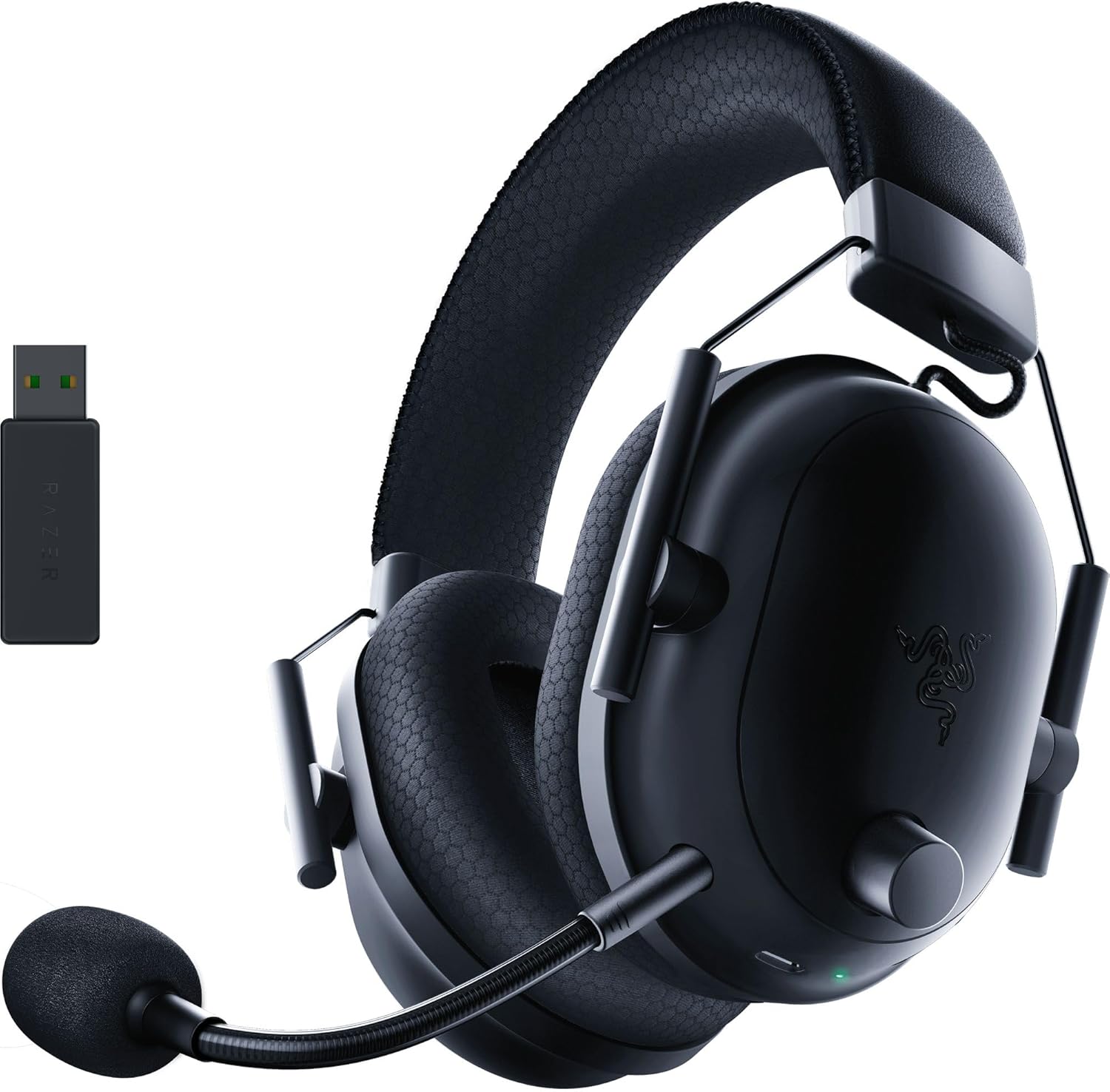
Razer BlackShark V2 Pro (2023)
Pros
- $129.99 as of September 2026, still strong value
- 70-hour battery life
- Best-in-class microphone for a gaming headset
- Extremely comfortable at just 320g
Cons
- No simultaneous Bluetooth + 2.4GHz mixing
- No analog/wired connection option
- Sound signature is gaming-tuned, not ideal for music purists
Price as of Feb 15, 2026 — see current price on Amazon.
The BlackShark V2 Pro from 2023 remains one of the best gaming headsets heading into 2026, and the reason is simple: Razer nailed the fundamentals and the price has dropped dramatically. It was $129.99 when I checked in September 2026, which is still absurd for what you get.
The microphone is the standout. Razer's HyperClear Super Wideband mic makes your voice sound clearer than most dedicated USB microphones, and the detachable boom design means you can remove it when you're just listening. It's the best mic on any gaming headset at this price.
Comfort is the other killer feature. At 320 grams with fabric-covered memory foam earpads, you can wear these for 8-hour sessions without fatigue. The stainless steel sliders flex enough to accommodate different head sizes without creating pressure points. 70 hours of battery life means weekly charging at most.
Sound is tuned for gaming, elevated treble for footsteps, controlled bass for explosions, and it works well for that purpose. Razer Synapse 3 lets you customize the EQ and save profiles directly to the headset. The built-in THX Spatial Audio adds decent immersion for single-player games.
The main limitation is connectivity. You get 2.4GHz wireless OR Bluetooth, not both simultaneously. There's no 3.5mm jack either, so you can't use these wired if the battery dies. For the price, these are minor quibbles.
Best for esports: Logitech G Pro X 2 Lightspeed
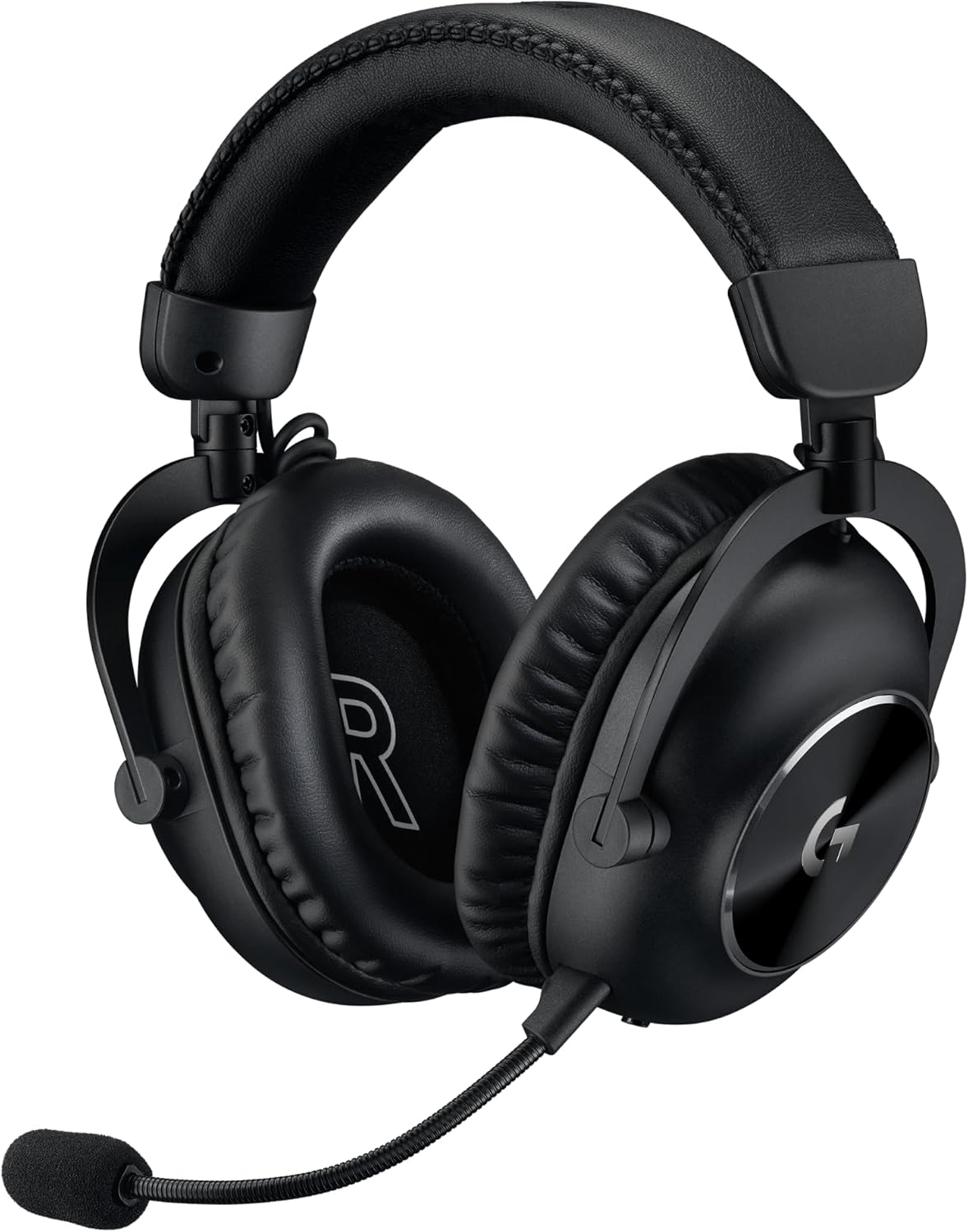
Logitech G Pro X 2 Lightspeed
Pros
- 50mm graphene drivers deliver accurate, detailed sound
- Triple connectivity: 2.4GHz, Bluetooth, and 3.5mm aux
- DTS:X 7.1 surround sound
- Compact, understated design that works outside of gaming
Cons
- 50-hour battery is good but not class-leading
- Earcups don't swivel flat for travel
- G HUB software can be finicky
Price as of Feb 15, 2026 — see current price on Amazon.
Logitech built the G Pro X 2 for competitive players who care about audio accuracy over flashy features. The 50mm graphene drivers produce a flatter, more neutral sound signature than most gaming headsets, which means audio cues land where they should, directional accuracy in FPS games is excellent.
The triple connectivity is a genuine advantage. 2.4GHz Lightspeed for low-latency gaming, Bluetooth for phone calls or music on the go, and a 3.5mm cable as backup. You can also mix 2.4GHz and Bluetooth audio simultaneously, which is increasingly table-stakes at this price but still appreciated.
Build quality is premium. The aluminum and steel construction feels durable without adding excessive weight. The design is restrained enough to wear on video calls without looking like you're about to frag someone, which matters if you work from home and game on the same headset.
DTS:X 7.1 virtual surround adds spatial depth, and Logitech's G HUB software offers decent EQ customization. The software itself can be temperamental (it's Logitech's weakest link), but once configured, settings save to the headset.
At $229.99, the G Pro X 2 sits in a tougher spot, $100 more than the BlackShark V2 Pro but more versatile with its triple connectivity. If you want one headset for gaming, work calls, and commuting, this is the one.
Best open-back: Turtle Beach Atlas Air

Turtle Beach Atlas Air
Pros
- Open-back design creates a wide, natural soundstage
- 24-bit high-fidelity audio processing
- Floating earcup design is supremely comfortable
- Broadcast-grade flip-to-mute microphone
Cons
- Open-back leaks sound, not for shared spaces
- Bass is weaker than closed-back alternatives
- No ANC (expected for open-back, but worth noting)
Price as of Feb 15, 2026 — see current price on Amazon.
Open-back gaming headsets are a niche within a niche, but the Atlas Air makes a compelling case for trying one. The open-back design lets air and sound pass through the earcups, creating a wider, more natural soundstage than any closed-back headset can achieve. Games sound less like they're playing inside your head and more like speakers positioned around you.
The floating earcup suspension system is one of the most comfortable designs available. There's virtually no clamping force, the cups hover against your ears rather than pressing into them. Combined with the memory foam cushions, you genuinely forget you're wearing a headset.
The flip-to-mute microphone is broadcast-grade quality, and 50 hours of battery life via 2.4GHz wireless keeps gaming sessions uninterrupted. Bluetooth connectivity adds versatility for phone calls and music.
The obvious caveat: open-back headsets leak sound. Everyone around you will hear what you're listening to, and you'll hear everything around you. Bass response is also lighter than closed-back competitors; you won't get the same chest-thumping explosion impact from an open-back design.
For solo gamers in a quiet room who prioritize sound quality and comfort over isolation, the Atlas Air is a revelation.
What to look for in a gaming headset
Wireless technology matters
All the headsets on this list use 2.4GHz wireless for gaming, and for good reason, Bluetooth adds too much latency for competitive play. Look for headsets that offer both 2.4GHz and Bluetooth, ideally simultaneously. The 2.4GHz connection handles your game audio with sub-millisecond latency while Bluetooth lets you take phone calls or chat on Discord mobile.
Driver size isn't everything
Bigger drivers don't automatically mean better sound. The Audeze Maxwell's 90mm planar magnetic drivers sound incredible, but the Razer BlackShark V2 Pro's 50mm dynamic drivers are excellent too. What matters more is driver technology and tuning. Planar magnetic drivers tend to produce more detailed, accurate sound but cost more and weigh more. Dynamic drivers are lighter and cheaper but can sound congested in the mids at lower price points.
Battery life vs. features
There's a direct tradeoff between battery life and features like ANC or RGB lighting. The HyperX Cloud Alpha 2 hits 250 hours because it doesn't have noise cancellation. The SteelSeries Arctis Nova Pro gets 44 hours partly because ANC draws power. Decide which matters more to you before shopping.
Comfort is personal
No review can tell you exactly how a headset will feel on your head. Clamping force, earcup size, headband padding, and weight all interact differently depending on your head shape and size. If possible, try before you buy, or order from a retailer with a good return policy. Lighter headsets (under 350g) are almost universally more comfortable for long sessions.
Frequently asked questions
- Are wireless gaming headsets as good as wired now?
- For gaming, yes. Modern 2.4GHz wireless connections have sub-1ms latency, which is indistinguishable from wired. The Audeze Maxwell even supports lossless wireless audio. The only remaining advantage of wired is zero battery management and slightly lower cost.
- Do I need a headset with ANC for gaming?
- It depends on your environment. If you game in a quiet room, passive noise isolation from closed-back earcups is plenty. ANC helps in noisy environments, apartments with street noise, rooms near a busy household, but it adds cost and reduces battery life.
- Can I use these headsets for music and work calls too?
- The Audeze Maxwell doubles as a legitimate music headphone. The Logitech G Pro X 2 and Razer BlackShark V2 Pro both work well for work calls thanks to their good microphones and Bluetooth connectivity. The days of needing separate headphones for gaming and everything else are over.
- What's the difference between open-back and closed-back?
- Closed-back headsets seal around your ears, blocking outside noise and keeping your audio private. They tend to have stronger bass but a narrower soundstage. Open-back headsets let sound pass through, creating a wider, more natural soundstage at the cost of zero noise isolation and sound leakage. Most gamers want closed-back; audiophile-minded gamers in quiet rooms might prefer open-back.
The verdict
The SteelSeries Arctis Nova Pro Wireless remains the most complete gaming headset package in 2026. Hot-swap batteries, ANC, multi-system switching, and Sonar's parametric EQ give it an edge in features that no single competitor matches.
If sound quality trumps everything, the Audeze Maxwell is in a different league. If budget matters, the Razer BlackShark V2 Pro (2023) at $129.99 is still highway robbery for the quality you get. And if you've never tried an open-back gaming headset, the Turtle Beach Atlas Air might change how you think about gaming audio entirely.
Pick the one that matches your priorities, and you won't be disappointed.
Looking for more peripheral recommendations? Check out our guides to the best mechanical keyboards under $100, best ergonomic mice, and best gaming monitors.
How We Pick
We pick products by combining spec-level research, price checks, trusted third-party benchmarks, and owner sentiment from high-signal sources.
- Performance and real-world value in the category this guide targets
- Price-to-performance and deal consistency over recent pricing windows
- Build quality, reliability patterns, and known long-term issues
- Recommendation refresh cadence to keep these picks current
Author
TheTechSearch Editorial Team
Independent product reviewers & PC builders
We compare real-world specs, reviews and owner reports, price trends, and user feedback to recommend gear that actually makes sense to buy.