Best Gaming Chairs 2026
The best gaming chairs you can buy in 2026, ranked. From budget-friendly options under $200 to premium ergonomic seats that last a decade. Expert picks, pros...
As an Amazon Associate we earn from qualifying purchases made through our links — this doesn't affect our picks.

Secretlab Titan Evo
Our top recommendation for this category
Price as of Feb 17, 2026 — see current price on Amazon.
Your chair matters more than your GPU. Seriously. You can tolerate 10 fewer frames per second, but eight hours in a bad seat will wreck your back for weeks. The gaming chair market has matured a lot since the early days of slapping racing stripes on office furniture and calling it a day. Real lumbar support, breathable materials, and adjustability that actually works are table stakes now.
These are the seats worth spending money on in 2026.
Our top picks at a glance
| Chair | Type | Max Weight | Recline | Price | |
|---|---|---|---|---|---|
| Secretlab Titan Evo | Racing-style | 285 lbs (Regular) | 165° | $669 | Check Price |
| Corsair TC100 Relaxed | Racing-style | 264 lbs | 160° | $162 | Check Price |
| Herman Miller Embody | Ergonomic | 300 lbs | Synchro-tilt | $1,830 | Check Price |
| Razer Iskur V2 | Racing-style | 299 lbs | 152° | $499 | Check Price |
| AndaSeat Kaiser 4 | Racing-style | 397 lbs (XL) | 165° | $549 | Check Price |
| noblechairs HERO | Racing-style | 330 lbs | 125° | $589 | Check Price |
Best overall: Secretlab Titan Evo
Secretlab Titan Evo
Pros
- 4-way integrated lumbar support is genuinely excellent
- Magnetic head pillow and armrest covers swap easily
- Available in three sizes (S, R, XL) for different body types
- Build quality aimed at years of daily use
Cons
- More expensive than most competitors
- 3-year warranty is shorter than some ergonomic chairs
- Leatherette gets warm in hot rooms without AC
Price as of Feb 17, 2026 — see current price on Amazon.
The Titan Evo tops basically every gaming chair list for a reason, and it's not because reviewers are lazy. The integrated 4-way lumbar support is the standout feature. Instead of a lumbar pillow that slides around and falls off when you lean back, Secretlab built the adjustment directly into the backrest. Twist the dial and the support moves up, down, deeper, or shallower. It sounds simple. Most chairs still don't do it.
The magnetic head pillow and armrest covers are a nice touch. They snap on and off cleanly, and Secretlab sells themed covers if you want to personalize the look without buying a whole new chair. The 4D armrests adjust in every direction you'd want and lock firmly in place.
Three size options (Small, Regular, XL) mean you can actually match the chair to your body rather than hoping one size fits all. The XL handles up to 397 pounds and accommodates taller frames without the seat pan feeling cramped.
The main knock is price. At $669 for the Regular leatherette configuration, it costs more than most gaming chairs. You can spend less and get something decent. But if you're buying one chair for the next three to five years, the Titan Evo earns its price through build quality alone. The cold-cure foam barely shows wear after extended use, and the steel frame feels overbuilt in a good way.
Best budget: Corsair TC100 Relaxed

Corsair TC100 Relaxed
Pros
- Under $200 and doesn't feel cheap
- Wider seat base than most budget chairs
- Memory foam neck pillow is surprisingly good
- Available in fabric or leatherette
Cons
- Lumbar pillow instead of integrated support
- 2D armrests only (up/down, in/out)
- No tilt lock at specific angles
Price as of Feb 17, 2026 — see current price on Amazon.
Most gaming chairs under $200 are garbage. Thin padding, wobbly bases, armrests that snap off after six months. The Corsair TC100 Relaxed is the exception that makes the category worth considering.
The wider seat base is the first thing you notice. Budget chairs tend to run narrow with aggressive bolstering that squeezes your thighs. The TC100 Relaxed spreads things out and uses thicker cushioning that holds its shape. After a few months of daily use, the seat doesn't bottom out or develop a permanent indent the way cheaper foam does.
You do make compromises at this price. The lumbar support is a separate pillow strapped to the backrest rather than an integrated mechanism. It works fine, but it shifts around and needs readjusting when you change positions. The armrests only move in two directions, which is workable but limiting. And while the 160-degree recline angle is solid on paper, there's no tilt lock at intermediate angles, so it's either upright or fully reclined.
For $162, though, those are reasonable tradeoffs. If you're setting up a gaming station on a budget or need a chair for a secondary setup, the TC100 Relaxed punches well above what you'd expect at this price. The fabric version breathes better in warm rooms; the leatherette cleans up easier.
Best premium: Herman Miller Embody

Herman Miller Embody Gaming Chair
Pros
- 12-year warranty puts every gaming chair to shame
- Pixelated support system molds to your spine automatically
- Breathable mesh eliminates heat buildup entirely
- Built for 8+ hours of daily sitting without fatigue
Cons
- $1,830 is a lot of money for a chair
- No headrest included (aftermarket options exist)
- Doesn't recline as far as traditional gaming chairs
Price as of Feb 17, 2026 — see current price on Amazon.
This is the chair for people who've realized that "gaming chair" and "good chair" aren't always the same thing. The Herman Miller Embody, particularly the Logitech G collaboration version, takes a different approach to seating than anything else on this list. No lumbar pillow, no memory foam, no racing-style bucket seat. Instead, the entire backrest uses a pixelated support structure that flexes independently at dozens of points to match the natural curve of your spine.
The result is a chair that feels weird for the first 20 minutes and then incredible for every hour after that. Your back doesn't get tired. There's no hot spot where a lumbar pillow digs in. The mesh seat and back breathe completely, so you never get that sweaty-back feeling during long sessions.
The 12-year warranty is what makes the price calculation work. At $1,830, it costs roughly $153 per year over its warranty period. Most $400-500 gaming chairs last two to three years before the foam collapses or the gas cylinder gives out. Per year of actual use, the Embody isn't as crazy expensive as the sticker price suggests.
The downsides are real, though. No built-in headrest means you're either buying an aftermarket one or doing without. The recline range is limited compared to gaming chairs that go nearly flat. And the aesthetic is office-first. If you want your setup to look like a cockpit, this won't deliver that vibe.
Best lumbar support: Razer Iskur V2
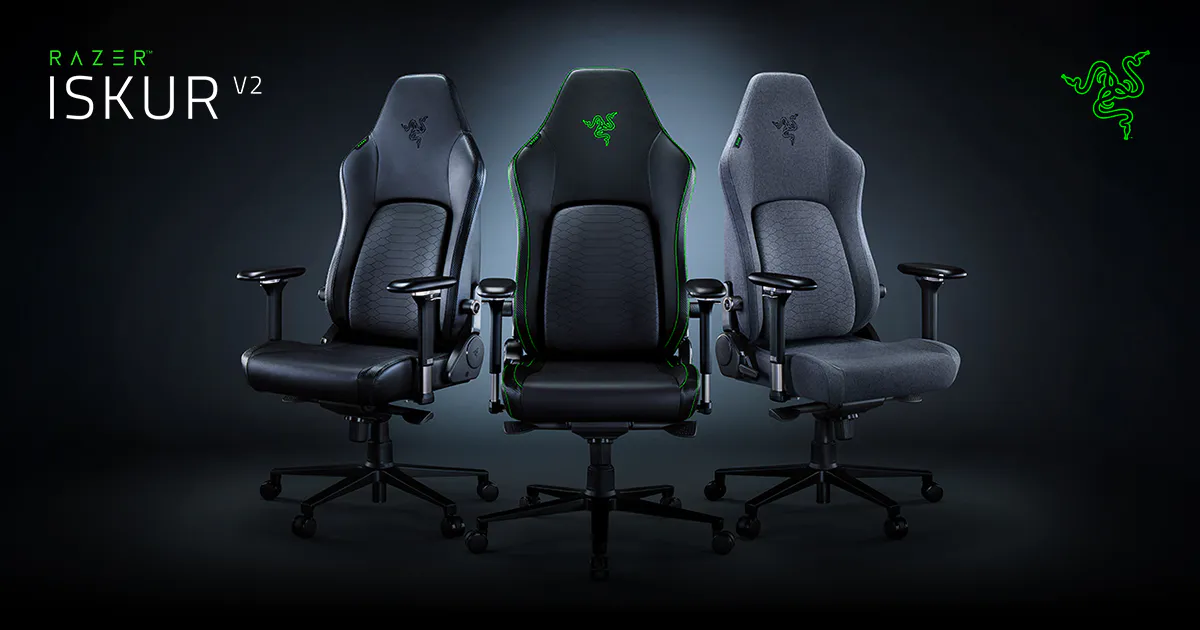
Razer Iskur V2
Pros
- Adaptive lumbar curve adjusts with a single dial
- High-density foam keeps its shape over time
- Reactive seat tilt responds to your movements
- 4D armrests with smooth adjustment
Cons
- Narrow seat might not suit wider builds
- Synthetic leather only (no fabric option)
- Head cushion could be thicker
Price as of Feb 17, 2026 — see current price on Amazon.
Razer's second attempt at a gaming chair fixes the problems that held the original Iskur back. The V2's adaptive lumbar system uses a single dial to adjust a flexible curve built into the lower backrest. It's not as granular as the Secretlab's 4-way system, but it's more intuitive. One knob, immediate feedback, done.
The reactive seat tilt is a subtle feature that makes a real difference during long sessions. The seat base shifts slightly as you lean forward or recline, keeping pressure distributed evenly rather than concentrating it on your thighs when you lean in toward your monitor. After a few hours, you notice the absence of that numbing feeling that cheaper chairs create.
High-density foam throughout the seat and back maintains its shape well. Razer went denser than most gaming chairs at this price, which means the initial sit feels firmer than you might expect. Give it a week to break in, and it hits a good balance between support and cushion.
The seat pan runs narrow, which is worth knowing before you buy. If you prefer sitting cross-legged or need extra hip room, the Iskur V2 will feel tight. The synthetic leather is Razer's only material option here, so there's no fabric alternative for people who run warm. At $499, it sits right next to the Titan Evo in price, and the choice between them comes down to whether you prefer Razer's lumbar approach or Secretlab's.
Best for big and tall: AndaSeat Kaiser 4
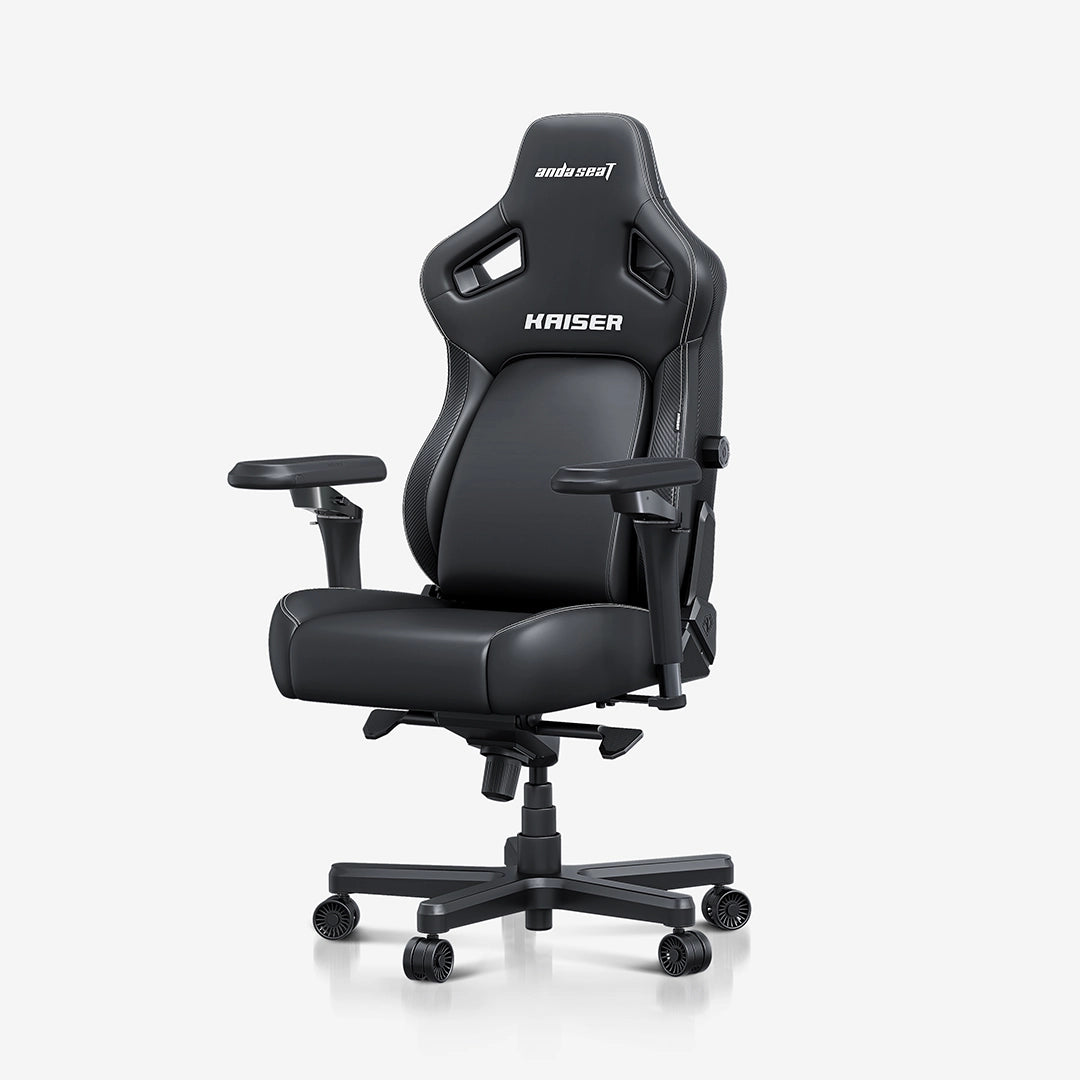
AndaSeat Kaiser 4
Pros
- XL size handles up to 397 lbs comfortably
- 6D armrests offer the most adjustability in this list
- Magnetic lumbar pillow stays put during movement
- Available in L and XL sizes
Cons
- Heavy chair at 75+ lbs, tough to move around
- Premium price for a non-Secretlab brand
- Assembly takes 30-40 minutes with many bolts
Price as of Feb 17, 2026 — see current price on Amazon.
If you're over 6'2" or above 250 pounds, most gaming chairs feel like squeezing into airplane seats. The Kaiser 4 XL was designed specifically for larger frames, and it shows. Its seat pan is noticeably wider than competitors, the backrest extends higher, and the weight capacity tops out at 397 pounds without feeling like you're pushing the chair's limits.
The 6D armrests are the Kaiser 4's party trick. Beyond the standard four directions (up/down, forward/back, in/out, pivot), they add rotation and depth adjustment. It sounds excessive until you find that exact arm position where your elbows and wrists feel right during a long Destiny raid or coding session. Once you dial them in, going back to basic armrests feels primitive.
AndaSeat went with a magnetic lumbar pillow rather than an integrated system. It works better than most pillow-based solutions because the magnets keep it anchored to the backrest, so it doesn't slide down every time you shift positions. The cold-cure foam is dense and slow to deform, which matters more at higher weight loads where cheap foam compresses permanently within months.
The weight is the main drawback. At over 75 pounds fully assembled, moving this chair across carpet or hardwood takes effort. Assembly is also an event, not a quick setup. Budget 30-40 minutes and expect a lot of bolts. But once it's together, the Kaiser 4 feels solid in a way that lighter chairs simply don't.
Best classic design: noblechairs HERO
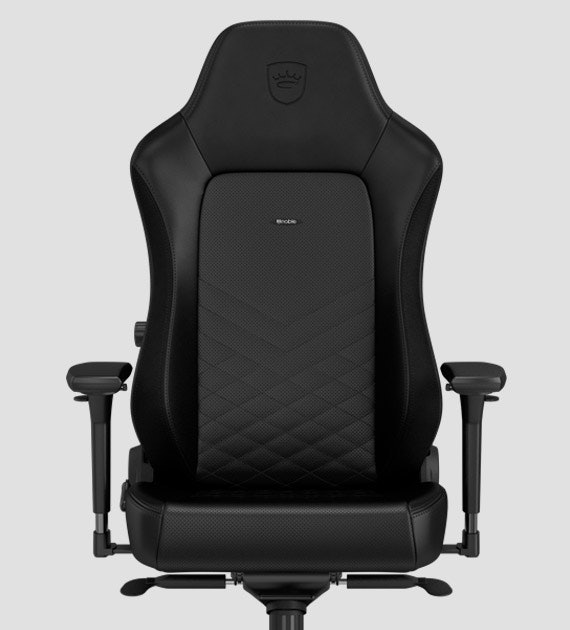
noblechairs HERO
Pros
- Understated design fits offices and gaming setups
- Integrated lumbar and seat depth adjustment
- PU leather feels higher quality than most competitors
- Steel frame with 4D armrests
Cons
- Firm seat takes longer to break in
- Limited recline (125 degrees max)
- Heavier than it looks
Price as of Feb 17, 2026 — see current price on Amazon.
The noblechairs HERO is for people who want a gaming chair that doesn't scream "gaming chair." No RGB, no racing stripes, no aggressive bolstering. It looks like expensive office furniture, which is exactly the point. If your setup is in a shared living space or you take video calls from your desk, the HERO blends in without sacrificing the gaming-specific features you need.
The integrated lumbar adjustment sits in the lower backrest and lets you increase or decrease the outward pressure. It's not as refined as Secretlab's 4-way system, but it works without a separate pillow, which is the important part. Seat depth adjustment is a feature most gaming chairs skip entirely. Being able to slide the seat pan forward or back changes how your thighs sit against the cushion, and it's especially useful if you're between sizes on most chairs.
The PU leather has a different hand feel than the synthetic leather on Razer or Secretlab chairs. It's smoother, less plasticky, and ages more gracefully. After a year of use, it develops a slight patina rather than peeling or cracking.
The seat runs firm. Noticeably firmer than the Titan Evo or Kaiser 4. Some people love it, some find it uncomfortable for the first couple weeks until the foam breaks in. The limited 125-degree recline also means this isn't the chair for leaning back during movie watching or casual gaming sessions. It's designed for upright sitting, and it does that well.
What to look for in a gaming chair
Lumbar support
This is the single most important feature. Integrated lumbar adjustment built into the backrest beats a separate pillow every time. Pillows shift, fall, and never quite sit where you need them. If your budget allows, prioritize chairs with built-in lumbar systems.
Material choice
Leatherette (PU leather, synthetic leather) cleans easily and looks sleek but traps heat. Fabric breathes better and stays cool but stains more easily. If your room runs warm or you game without AC, fabric is the better call. If you eat at your desk, leatherette saves you from permanent stains.
Armrest adjustability
4D armrests (up/down, forward/back, in/out, pivot) are the minimum for serious use. Your arms should rest naturally while gaming and typing without your shoulders hunching up. Cheap 2D armrests force you to adapt to the chair instead of the other way around.
Size matching
Check the manufacturer's height and weight ranges before buying. A chair rated for 5'9" to 6'2" will feel wrong at 5'6" or 6'4". Most premium brands offer multiple sizes now. Use them.
Warranty and foam density
A 3-year warranty on a $500 chair means the manufacturer expects it to last roughly that long. A 12-year warranty means they're confident in the build. Cold-cure foam and high-density foam hold shape longer than standard padding. This matters more than any spec sheet number for long-term comfort.
Frequently asked questions
- Are gaming chairs better than office chairs?
- Not inherently. Good gaming chairs (Titan Evo, Iskur V2) match or beat mid-range office chairs for ergonomics. But premium office chairs like the Herman Miller Embody or Steelcase Leap are better for all-day sitting than any racing-style seat. The gap has narrowed a lot, though. Five years ago, most gaming chairs were glorified bucket seats with no real ergonomic design. That's changed.
- How long do gaming chairs last?
- Budget chairs ($100-200) typically last 1-3 years before the foam collapses or the gas cylinder fails. Mid-range chairs ($300-500) from reputable brands last 3-5 years with daily use. Premium options ($500+) can go 5+ years. The Herman Miller Embody is warrantied for 12.
- Is the Secretlab Titan Evo worth the price?
- For most people, yes. The build quality, integrated lumbar, and size options make it the safest recommendation at its price point. You can spend less and get something usable (Corsair TC100), but the Titan Evo is where diminishing returns start. Spending more than $669 on a gaming-style chair doesn't buy proportionally more comfort.
- Should I get fabric or leatherette?
- Fabric if your room gets warm, if you don't eat at your desk, and if you prefer a softer feel. Leatherette if you want easy cleaning, a more premium look, and don't mind occasionally peeling yourself off the seat during summer. Both work. Neither is objectively better.
- What chair is best for back pain?
- The Herman Miller Embody is the gold standard for people with existing back issues. Its pixelated support system distributes pressure more evenly than any foam-based chair. Among gaming-style options, the Secretlab Titan Evo's 4-way lumbar and the Razer Iskur V2's adaptive curve both provide meaningful support. But if you have chronic back pain, consider seeing a physiotherapist before spending $500 on a chair. No seat fixes bad posture habits.
The verdict
The Secretlab Titan Evo is the best gaming chair for most people. It nails the fundamentals without overcomplicating anything, and it's built to last. If you're on a tight budget, the Corsair TC100 Relaxed delivers surprising quality for under $200. And if you're ready to invest in your spine for the long haul, the Herman Miller Embody is the endgame chair that justifies its price over a decade of use.
Pick the one that matches your body, your budget, and your room temperature. Your back will thank you in five years.
Looking for more gaming peripherals? Check out our picks for the best gaming headsets, best ergonomic mice, best mechanical keyboards under $100, and best gaming monitors.
How We Pick
We pick products by combining spec-level research, price checks, trusted third-party benchmarks, and owner sentiment from high-signal sources.
- Performance and real-world value in the category this guide targets
- Price-to-performance and deal consistency over recent pricing windows
- Build quality, reliability patterns, and known long-term issues
- Recommendation refresh cadence to keep these picks current
Author
TheTechSearch Editorial Team
Independent product reviewers & PC builders
We compare real-world specs, reviews and owner reports, price trends, and user feedback to recommend gear that actually makes sense to buy.