Best Smart Thermostats 2026: Ecobee, Nest, and Honeywell Compared
The best smart thermostats of 2026 compared on energy savings and smart home integration. Top picks from Ecobee, Google Nest, Honeywell, Wyze, and Amazon.
As an Amazon Associate we earn from qualifying purchases made through our links — this doesn't affect our picks.
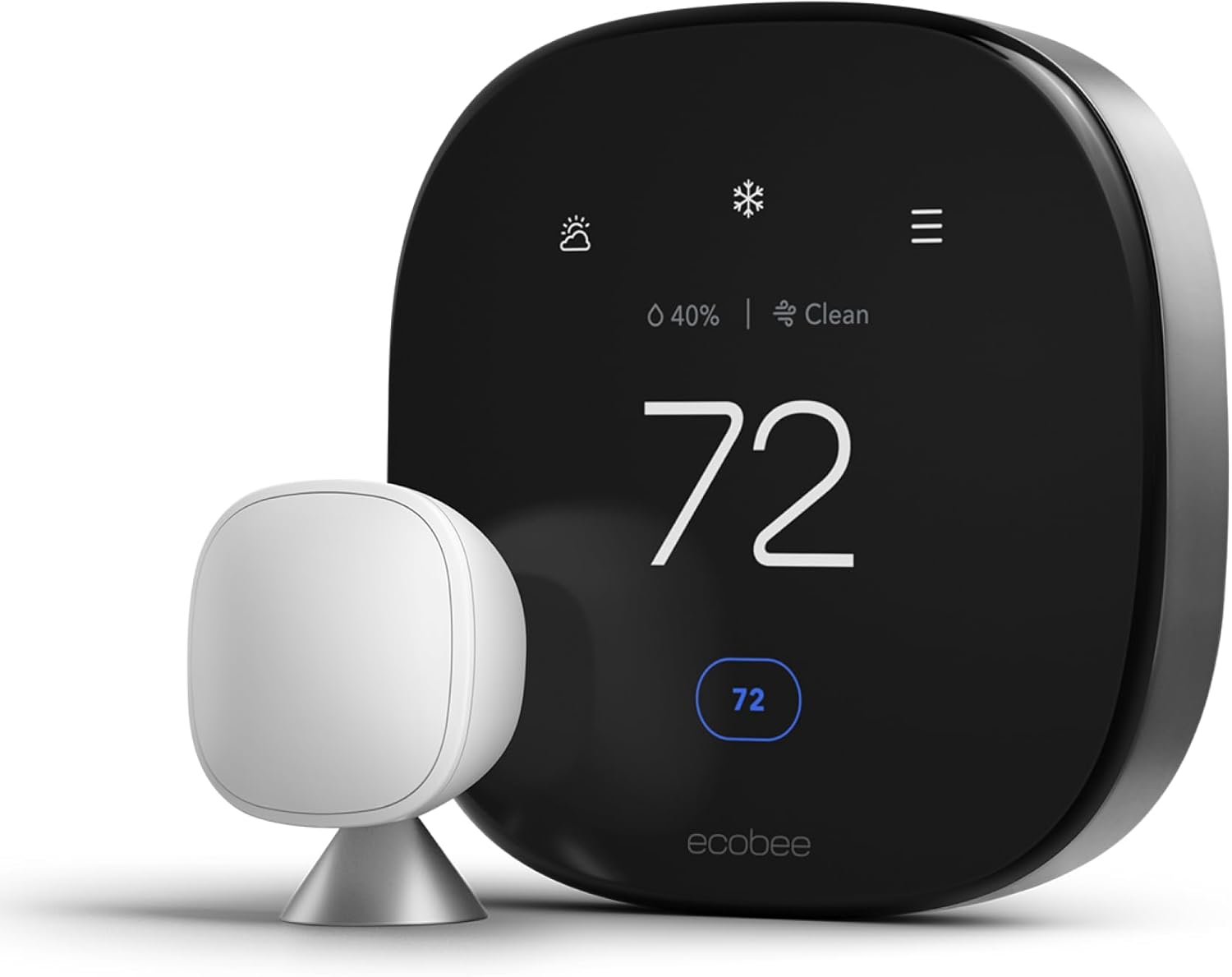
Ecobee Smart Thermostat Premium
Our top recommendation for this category
Price as of Feb 27, 2026 — see current price on Amazon.
Heating and cooling accounts for nearly half of the average home energy bill. A smart thermostat does not just give you a nicer interface for adjusting the temperature. The right one learns your schedule, cuts waste during unoccupied hours, and pays for itself in 6 to 18 months depending on your climate and usage.
This guide compares five smart thermostats for 2026 on compatibility, installation complexity, app quality, and actual energy-saving features. The lineup ranges from $60 budget options to $280 learning thermostats with room sensors.
Not sure you need one at all? The is a smart thermostat worth it guide runs the payback math first.
Quick picks
- Best overall: Ecobee Smart Thermostat Premium at ~$249: air quality monitoring, Siri built-in, and the most thoughtful feature set of any thermostat in this price range
- Best learning thermostat: Google Nest Learning Thermostat 4th Gen at ~$280: programs itself in about a week by tracking your adjustments
- Best mid-range pick: Honeywell Home T6 Pro WiFi at ~$125: reliable, no subscription, works with every major assistant
- Best budget pick: Wyze Thermostat at ~$60: does everything you actually need for a third of the premium price
- Best for Alexa households: Amazon Smart Thermostat at ~$65: deepest Alexa integration of any thermostat at the lowest price
Ecobee Smart Thermostat Premium
Ecobee Smart Thermostat Premium
Pros
- Built-in air quality monitor tracks CO2, VOCs, humidity, and particulates
- Siri, Alexa, and Google Assistant all built in simultaneously
- Included SmartSensor detects occupancy and temperature in a second room
- Smoke alarm detection sends alerts when system is armed
- ENERGY STAR certified with eco+ smart savings mode
Cons
- Premium pricing over comparable thermostats
- Full eco+ features require optional subscription beyond basic functions
- Larger display footprint than Nest or Honeywell
Price as of Feb 27, 2026 — see current price on Amazon.
The Ecobee Smart Thermostat Premium is the most feature-complete smart thermostat available in 2026. What separates it from everything else is the built-in air quality monitor that tracks CO2, volatile organic compounds, humidity, and fine particulates. Most thermostats just control temperature. The Ecobee also tells you when to crack a window.
The included SmartSensor is a practical addition that comes bundled rather than sold separately. Place it in your bedroom or home office and the Ecobee will average the temperature between rooms, preventing the hallway thermostat from calling your whole house comfortable while your upstairs bedroom is still 78 degrees.
Siri, Alexa, and Google Assistant all run simultaneously on the built-in microphone array. You do not have to commit to one ecosystem. If your household is split between iPhone users and Android users, the Ecobee handles it without any workarounds.
The eco+ mode works well for people who are not on a fixed schedule. It reads your local utility's time-of-use pricing and pre-conditions your home during cheaper off-peak hours. Over a full year, Ecobee claims up to 26% savings on HVAC costs, which is aggressive but plausible in climates with real winters or summers.
If you want a smart thermostat and are willing to pay for the best available, this is it.
Best for: Homeowners who want the broadest feature set, anyone in a variable-rate electricity market, households where both iOS and Android users need voice control.
Google Nest Learning Thermostat (4th Gen)
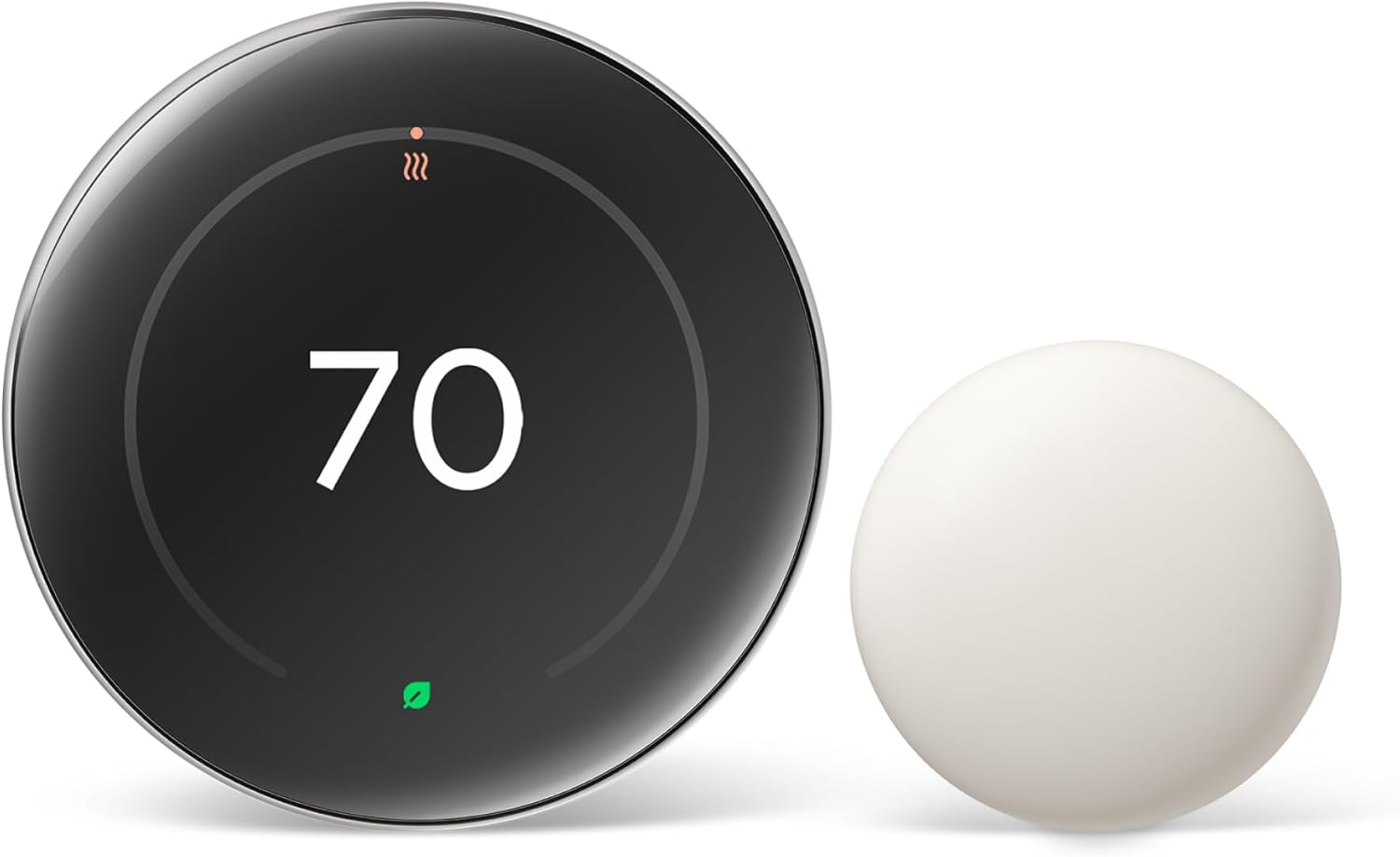
Google Nest Learning Thermostat 4th Gen
Pros
- Programs itself in about a week by tracking your manual adjustments
- Works with Google Home, Alexa, and Apple HomeKit (full compatibility)
- Bundled temperature sensor covers a second room out of the box
- Farsight feature wakes the display when you walk by
- Adaptive Eco reduces energy use when it predicts you will be away
Cons
- Requires C-wire in most installations (adapter sold separately)
- Google Home app required for full setup, Apple Home is secondary
- Higher price than Ecobee for comparable feature count
Price as of Feb 27, 2026 — see current price on Amazon.
The Nest Learning Thermostat's defining feature is its algorithm. For the first week, you adjust the temperature manually just like a regular thermostat. The Nest observes those adjustments, cross-references them with your motion data and the time of day, and builds a schedule without you touching a setting screen. By day ten, most users stop adjusting it at all.
The 4th generation adds Adaptive Eco, which goes beyond simple away mode. The thermostat watches your location, local weather forecasts, and historical patterns to predict when you will leave and arrive, then pre-conditions your home accordingly. Coming home to a house already at 68 degrees after a cold commute is a noticeably different experience than the old approach of arriving home and waiting 45 minutes for the heat to catch up.
Apple HomeKit support is full and native, not a workaround. This bundle includes a second-generation Nest Temperature Sensor so you can monitor a separate room from the start. That matters in two-story homes where the thermostat is on the first floor and the bedrooms are on the second.
The main installation caveat is the C-wire requirement. Older homes often have a four-wire setup without a common wire. If your current thermostat has no C wire, budget an extra $20 for an adapter or check whether your HVAC system supports Nest's Power Connector workaround.
Best for: Google Home households, anyone who would rather have the thermostat manage itself than configure schedules, multi-story homes where room temperature balance matters.
Honeywell Home T6 Pro WiFi Thermostat
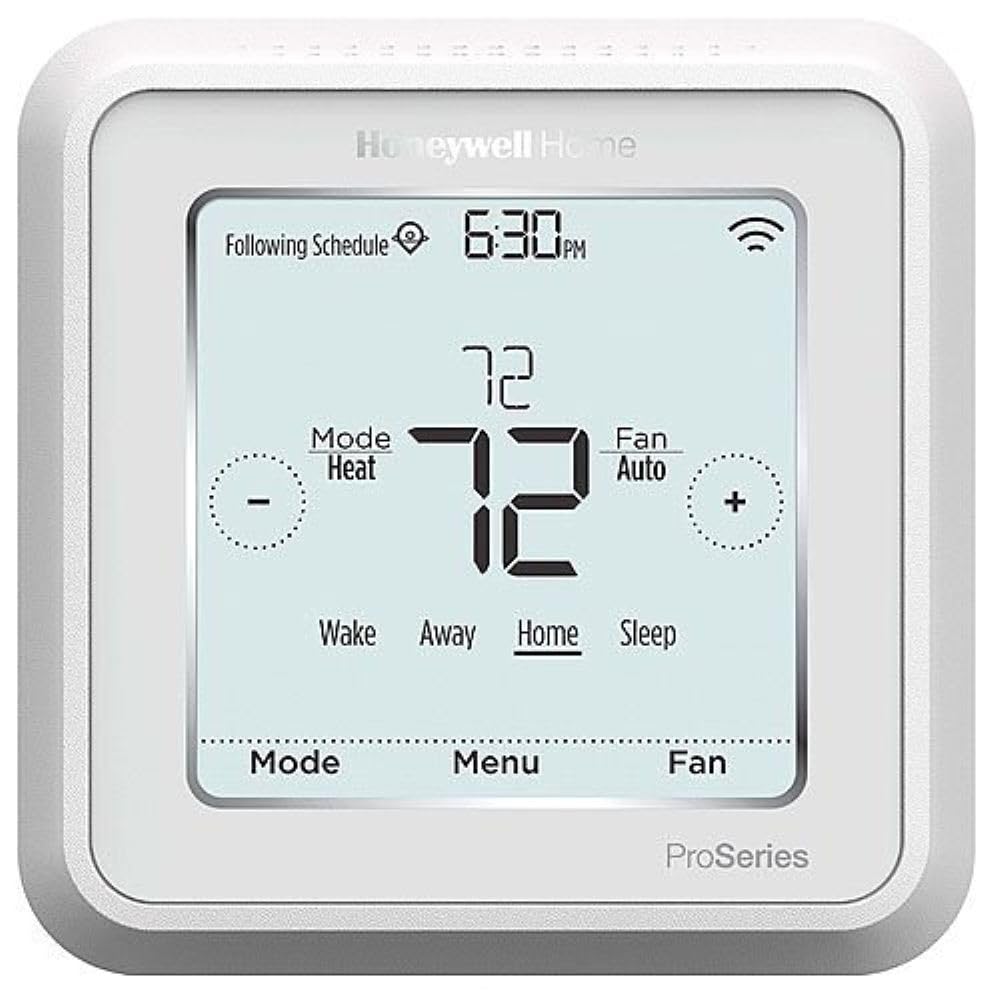
Honeywell Home T6 Pro WiFi
Pros
- No subscription required for any feature
- Works with Alexa and Google Assistant via app integration
- Flexible scheduling for complex multi-stage HVAC systems
- Wide compatibility with heat pumps, conventional, and multi-stage systems
- Simple, professional-grade interface with no learning curve
Cons
- No built-in voice assistant microphone
- App is functional but not as polished as Ecobee or Nest
- No room sensors or air quality features
Price as of Feb 27, 2026 — see current price on Amazon.
Honeywell's T6 Pro WiFi is the right thermostat for people who want smart home control without committing to one ecosystem or paying for features they will never use. At $125 to $130, it sits in a gap between the $60 budget options and the $250 premium tier.
The killer advantage is compatibility. Honeywell builds HVAC hardware for a living. The T6 Pro supports configurations that confuse smart thermostats from consumer tech companies: multi-stage heat pumps, dual-fuel systems, and complex 3 Heat / 2 Cool setups. If your home has a more involved HVAC system, the T6 Pro is worth considering on compatibility alone.
No subscription is required to access any feature, including the app or remote control. This sounds like a baseline expectation, but both Ecobee and Amazon quietly upsell subscription tiers for advanced features. The T6 Pro's full feature set is available from day one without a recurring fee.
The scheduling interface is date-based and granular rather than AI-driven. For people who keep a consistent schedule and want precise control over every period, this approach is more transparent than hoping an algorithm figures out your routine correctly.
Best for: Homes with complex or multi-stage HVAC systems, anyone who wants no subscription model, users who prefer manual control over algorithmic scheduling.
Wyze Thermostat
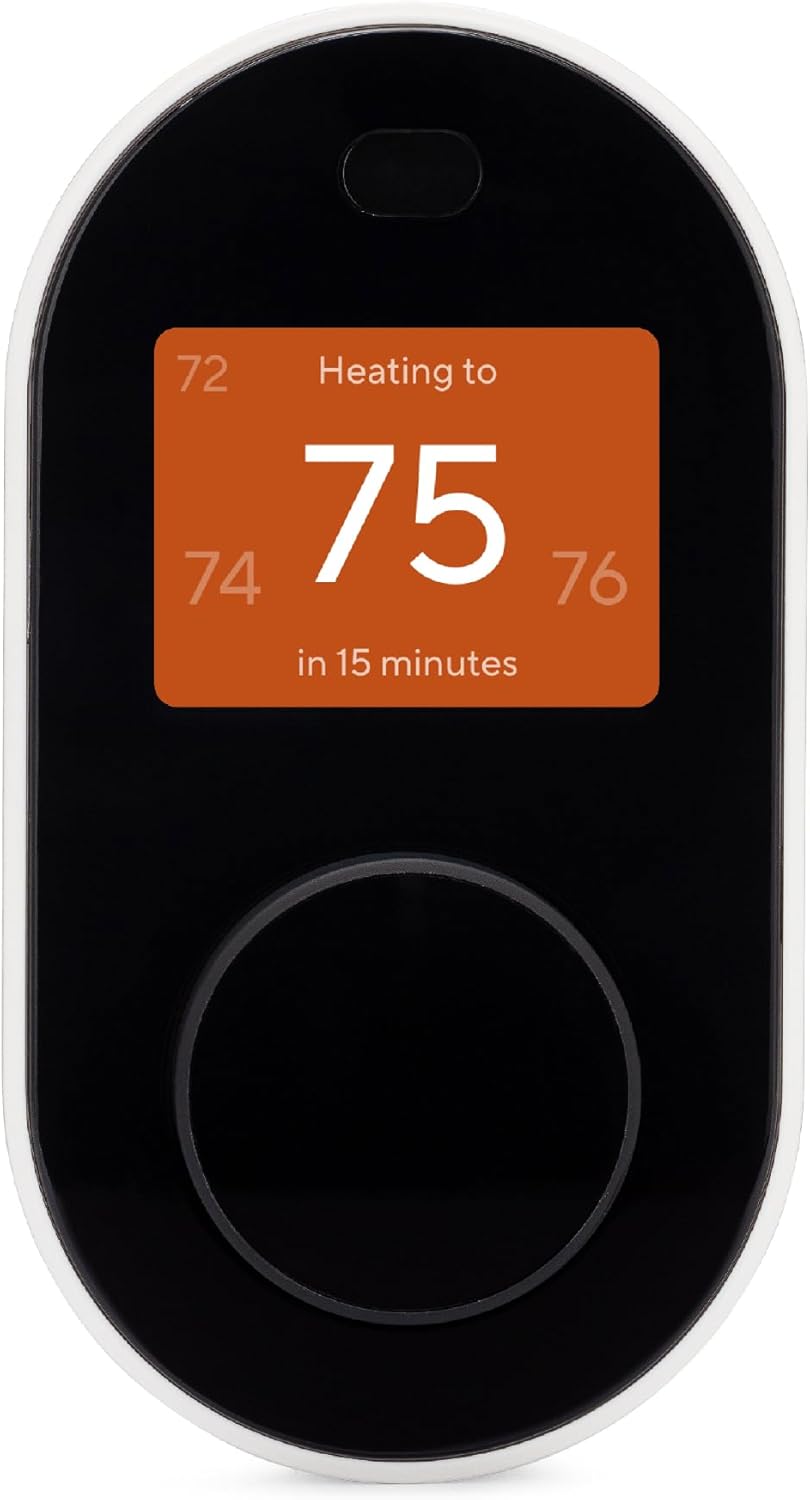
Wyze Thermostat
Pros
- Significantly cheaper than any comparable smart thermostat
- Works with Alexa and Google Assistant
- Clean touchscreen with large temperature display
- Geofencing auto-away works reliably via phone location
- Optional room sensors available for multi-room monitoring
Cons
- No Apple HomeKit or Siri support
- Room sensors sold separately (unlike Ecobee bundle)
- 2.4 GHz WiFi only, which can cause connection issues on congested networks
- Fewer integration options than premium thermostats
Price as of Feb 27, 2026 — see current price on Amazon.
Wyze built a business on delivering 80% of the premium experience at 30% of the price, and the Wyze Thermostat continues that pattern. At $60, it does not match the Ecobee on features or the Nest on intelligence, but it handles every core function a smart thermostat needs to handle: remote temperature control, scheduling, auto-away via geofencing, and voice control through Alexa and Google Assistant.
The touchscreen is better than the price suggests. The display is clear and responsive, with a large temperature readout that is readable from across a room. Setup takes about 20 minutes if your existing wiring is standard, and the app guides you through each wire label in plain language.
Geofencing is the most useful automatic feature here. When your phone leaves the set radius, the Wyze switches to an energy-saving mode automatically. When you return, it starts conditioning your home. This works without any schedule setup.
The 2.4 GHz WiFi limitation is worth noting if you have a crowded network with many IoT devices. In most homes this is not an issue, but dense apartment buildings or homes with 30+ WiFi devices may see occasional disconnects.
Best for: Budget-conscious buyers, renters who want smart control without overspending, Alexa or Google households that do not need HomeKit support.
Amazon Smart Thermostat
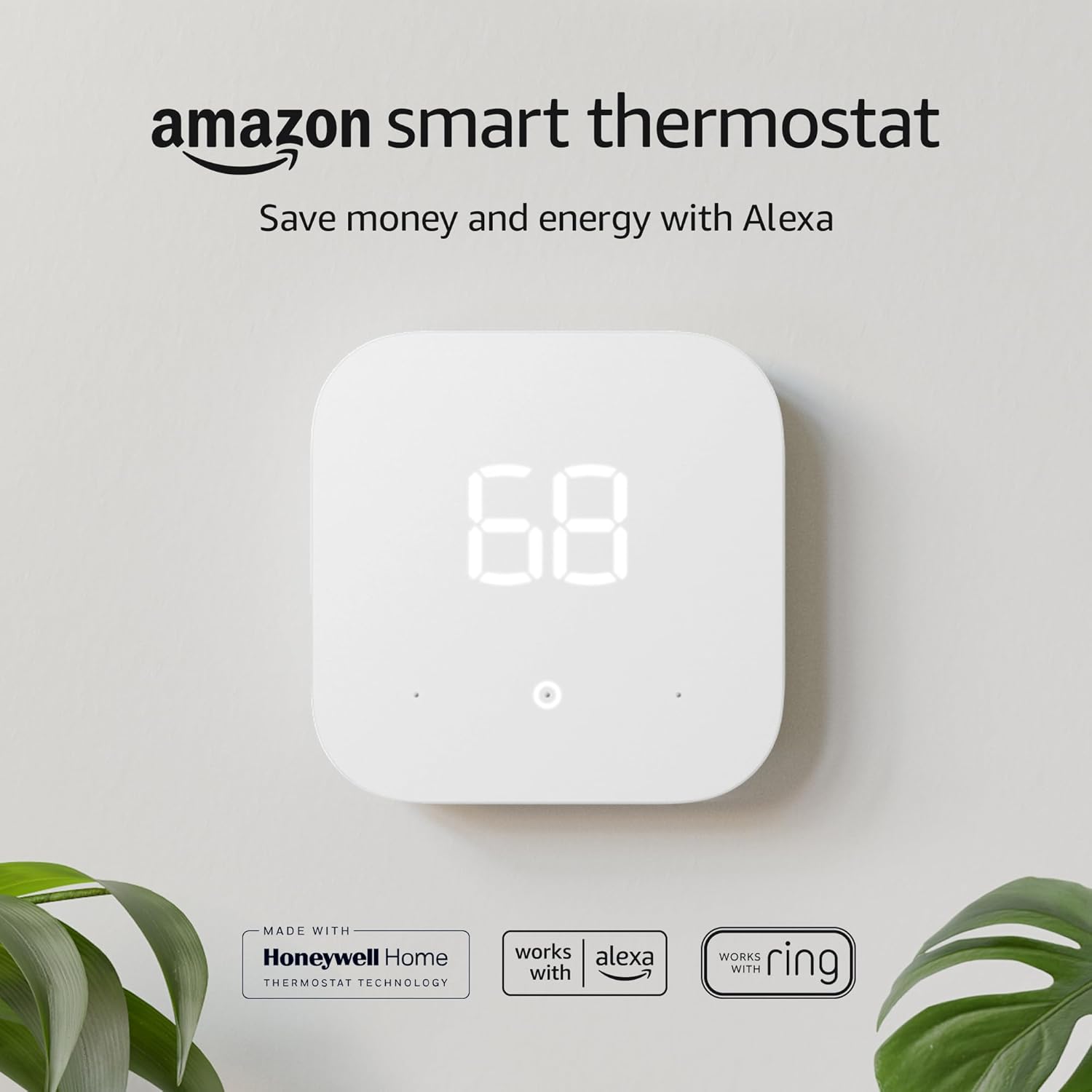
Amazon Smart Thermostat
Pros
- Deepest Alexa integration of any thermostat, responds to routines natively
- ENERGY STAR certified with Alexa-powered Hunches for auto-adjustments
- No subscription required for any feature
- Compact design with a small wall footprint
- Alexa Hunches can adjust temperature automatically based on patterns
Cons
- Alexa-only for voice control, no Google or Siri support
- Basic scheduling without learning or AI optimization
- Requires C-wire or separate adapter for some installations
- No room sensors available
Price as of Feb 27, 2026 — see current price on Amazon.
The Amazon Smart Thermostat is built specifically for people who are fully invested in the Alexa ecosystem. It integrates with Alexa Routines at a deeper level than any other thermostat. You can set the thermostat as a trigger for other actions or include it in complex routines alongside lights, locks, and plugs with no additional setup.
Alexa Hunches is a feature unique to Amazon hardware. Based on your patterns, Alexa will occasionally suggest temperature adjustments or make them automatically if you have enabled proactive actions. It is not as sophisticated as the Nest's self-programming, but it is a step above a basic schedule.
ENERGY STAR certification and compliance means it qualifies for rebate programs from many utility companies. Check your local utility website before purchase. In some states, a $65 thermostat becomes effectively free after a $60 to $75 rebate.
The limitation is ecosystem exclusivity. If anyone in your household wants to use Google Assistant or Siri to control the thermostat, the Amazon Smart Thermostat will not respond. For mixed households, the Ecobee or Honeywell are better choices.
Best for: Alexa-only households, people building deep Alexa automation routines, anyone whose utility offers energy rebates for certified smart thermostats.
How to Choose a Smart Thermostat
Check your wiring first
Most smart thermostats require a C-wire (common wire) to maintain a constant power supply. Look at your current thermostat before buying. If you see five or more wires and one is labeled C, you are fine. If you only have four wires without a C, you need either a thermostat that works without one (the Wyze handles some no-C installations) or a $15 to $20 C-wire adapter. Getting this wrong means a thermostat that reboots repeatedly or will not stay connected to WiFi.
Match the thermostat to your ecosystem
The single biggest predictor of satisfaction is ecosystem fit. If your home runs on Alexa, the Amazon Smart Thermostat integrates more deeply than anything else at any price. Google Home households benefit most from the Nest Learning Thermostat since it is a Google product with native integration. Apple HomeKit users should choose Ecobee or Nest Learning Thermostat, both of which support HomeKit natively. Mixed households benefit most from the Ecobee, which supports all three simultaneously.
For more on building out a smart home ecosystem, see our guide to best smart home hubs for 2026 and best smart speakers 2026.
Learning thermostats vs programmable thermostats
A learning thermostat observes your behavior and builds a schedule automatically. A programmable thermostat follows a schedule you define. Learning thermostats cost more but require less initial setup and adapt when your routine changes. Programmable thermostats cost less and give you precise control but require you to update schedules manually when your routine changes.
For most people, the Nest Learning Thermostat's self-programming is more likely to stay accurate over time than a schedule set once and forgotten. For people with highly variable schedules or shift workers, geofencing-based auto-away (available on Ecobee and Wyze) is more reliable than any schedule.
Subscription fees and long-term costs
Ecobee and Amazon offer free basic functionality with optional premium subscription tiers. The Honeywell T6 Pro and Wyze have no subscription model at all. Factor this in when comparing prices. A $249 Ecobee with no subscription cost is a better long-term value than a $180 competitor charging $5 per month for the features you actually want.
Compatible HVAC systems
Most smart thermostats work with standard single-stage forced air systems. Heat pumps, dual-fuel systems, radiant heating, and multi-stage systems require thermostats that explicitly list compatibility. The Honeywell T6 Pro covers the widest range of HVAC configurations, which is why HVAC technicians favor it for professional installs. Check the compatibility checker on each manufacturer's website before purchasing, or look up your furnace/air handler model number.
For homes where WiFi connectivity matters for your thermostat (and it will), see our picks for best mesh WiFi systems 2026 to make sure your thermostat has a solid connection from wherever it is mounted.
FAQ
What is the easiest smart thermostat to install? The Wyze Thermostat and Amazon Smart Thermostat are the easiest to install, with app-guided setup that walks you through each wire step by step. Both take 20 to 30 minutes for most standard systems. The Ecobee and Nest are slightly more involved but still DIY-friendly. If your system requires a C-wire adapter, add 10 minutes and about $15 to $20 for the part.
Do smart thermostats actually save money? Yes, but the savings depend on your current habits. Homes where occupants forget to adjust the temperature when leaving or sleeping typically save 15 to 23% on heating and cooling costs, which matches what Ecobee and Nest publish. Homes that already manually setback temperature at night and when away will see smaller gains. The biggest savings come from consistent auto-away behavior and time-of-use rate optimization in markets with variable electricity pricing.
Which smart thermostat works with Apple HomeKit? The Ecobee Smart Thermostat Premium and Google Nest Learning Thermostat 4th Gen both support Apple HomeKit natively. The Ecobee also runs Siri directly on the device. The Amazon Smart Thermostat and Wyze Thermostat do not support HomeKit. If HomeKit integration matters to you, choose Ecobee for the best combined Siri plus HomeKit experience.
Can a smart thermostat work without a C-wire? Some systems can. The Wyze Thermostat can work without a C-wire on compatible systems by using the G wire as a makeshift power supply. Amazon's Smart Thermostat requires a C-wire or a $20 adapter sold separately. The Ecobee includes a Power Extender Kit for systems without a C-wire. The Nest Learning Thermostat requires either a C-wire or its Power Connector accessory. Check the compatibility tool on each manufacturer's site using your current wiring configuration before buying.
How long does a smart thermostat take to pay for itself? For a $249 Ecobee in a climate with cold winters and hot summers, the typical payback period is 12 to 18 months based on 20% energy savings on a $200 monthly HVAC bill. For a $60 Wyze Thermostat with similar savings, payback is 2 to 4 months. Utility rebates can cut payback time significantly. Many utilities offer $50 to $100 rebates on ENERGY STAR certified thermostats, and both the Amazon Smart Thermostat and Ecobee qualify.
Verdict
The Ecobee Smart Thermostat Premium is the best smart thermostat for most homeowners in 2026. Air quality monitoring, multi-assistant support, and the included SmartSensor justify the $249 price for anyone staying in their home longer than two years. The payback math works.
For Google Home users who want a thermostat that manages itself, the Nest Learning Thermostat 4th Gen is the better fit. The self-programming algorithm is the most mature in the category, and the bundle with a room sensor removes the most common first-purchase regret.
At $60 to $65, the Wyze Thermostat and Amazon Smart Thermostat are legitimate options for renters, budget buyers, or anyone who wants basic smart control without spending more than a utility rebate might cover. Pick the Wyze if you use Google Assistant; pick the Amazon if Alexa is your ecosystem.
The Honeywell T6 Pro WiFi fills the mid-range gap for homes with complex HVAC systems or anyone who wants zero recurring costs and professional-grade reliability without paying premium pricing.
How We Pick
We pick products by combining spec-level research, price checks, trusted third-party benchmarks, and owner sentiment from high-signal sources.
- Performance and real-world value in the category this guide targets
- Price-to-performance and deal consistency over recent pricing windows
- Build quality, reliability patterns, and known long-term issues
- Recommendation refresh cadence to keep these picks current
Author
TheTechSearch Editorial Team
Independent product reviewers & PC builders
We compare real-world specs, reviews and owner reports, price trends, and user feedback to recommend gear that actually makes sense to buy.