Best Smart Speakers 2026: Echo, Nest Audio, and HomePod Compared
The best smart speakers for 2026 compared across sound quality, smart home integration, and value. Top picks from Amazon, Google, and Apple. Expert picks, pr...
As an Amazon Associate we earn from qualifying purchases made through our links — this doesn't affect our picks.
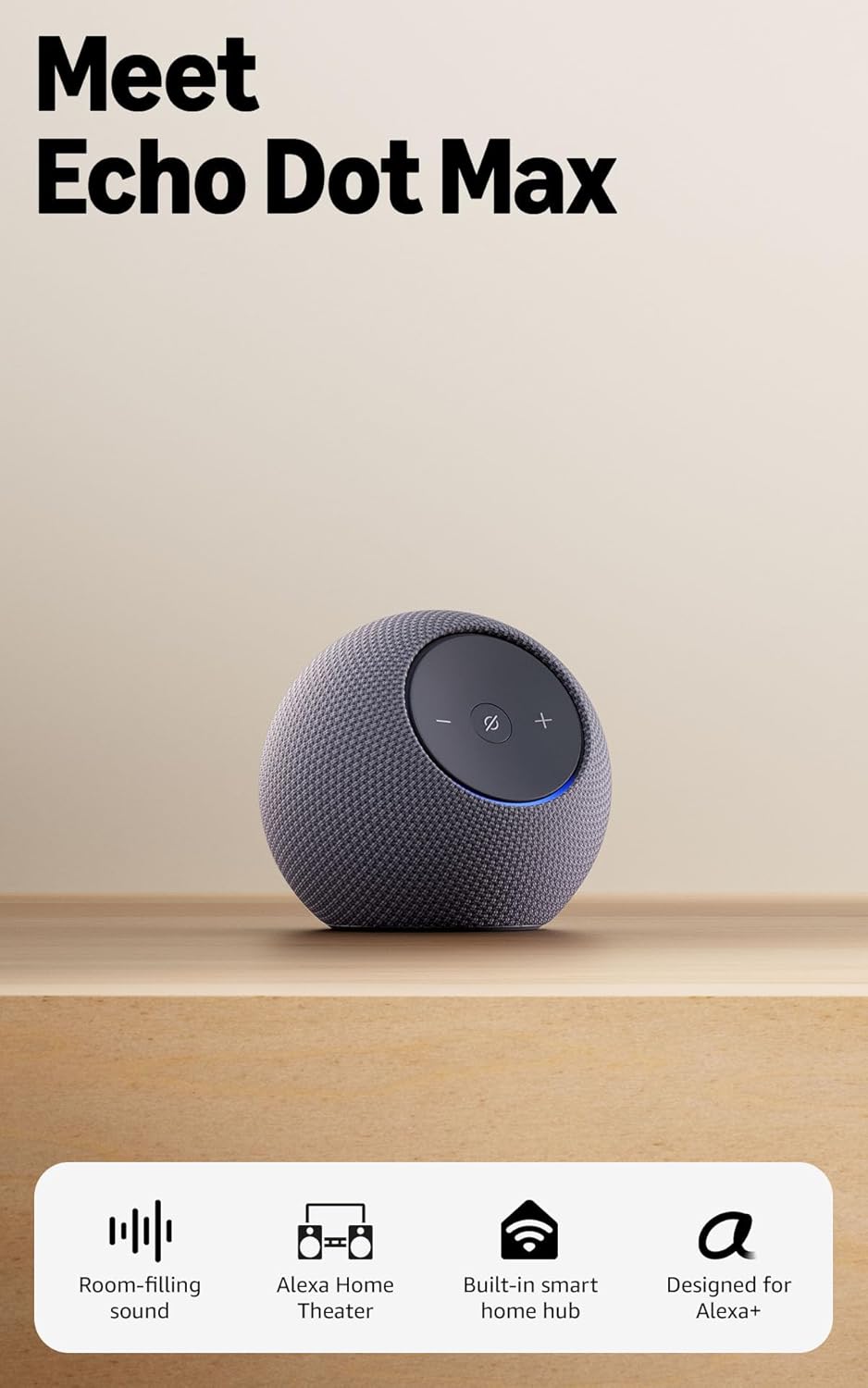
Amazon Echo Dot Max
Our top recommendation for this category
Price as of Feb 27, 2026 — see current price on Amazon.
Smart speakers have settled into three clear ecosystems, and the one you pick will define how your entire smart home works. The wrong choice means every automation feels like a workaround. The right one means lights, locks, and thermostats respond the moment you ask.
Below, five speakers go head to head on the three things that actually separate them: multi-room audio, smart home control, and music playback. If you want a screen as well, our best smart displays guide covers the Echo Show line.
Quick picks
- Best overall: Amazon Echo Dot Max at ~$100: the sweet spot of sound, smarts, and price
- Best sound quality: Amazon Echo Studio at ~$220: Dolby Atmos and spatial audio in a compact package
- Best for Google Home: Google Nest Audio at ~$100: natural language commands and clean 75mm woofer
- Best for Apple HomeKit: Apple HomePod mini at ~$99: Siri, U1 chip, and smooth iPhone handoff
- Best premium pick: Apple HomePod 2nd Gen at ~$299: the fullest sound of any smart speaker in this roundup
Amazon Echo Dot Max
Amazon Echo Dot Max
Pros
- Nearly 3x the bass of the standard Echo Dot
- Pairs with Fire TV for home theater audio
- Alexa+ integration for more natural conversations
- Works as Thread border router for smart home automation
Cons
- Alexa+ subscription required for some premium features
- Rounded shape limits placement on flat surfaces
- No 3.5mm audio output
Price as of Feb 27, 2026 — see current price on Amazon.
The Echo Dot Max launched in fall 2025 as Amazon's answer to the HomePod mini and Nest Audio. It punches above the standard Echo Dot with a redesigned driver array that delivers noticeably more low-end without distortion at high volumes.
The real advantage here is ecosystem depth. Alexa integrates with more smart home devices than any other assistant, and the Echo Dot Max doubles as a Thread border router, which means it actively helps your Matter devices connect more reliably. If you're building an Alexa household, this is the speaker to anchor each room.
At $99.99, it's priced identically to the HomePod mini and Nest Audio. The difference is in tone: Echo Dot Max leans warm and bass-forward, which works well for pop and hip-hop but can feel muddy on classical or acoustic tracks.
Best for: Alexa households, people building out a smart home device network, Fire TV users who want to extend their home theater audio.
Amazon Echo Studio
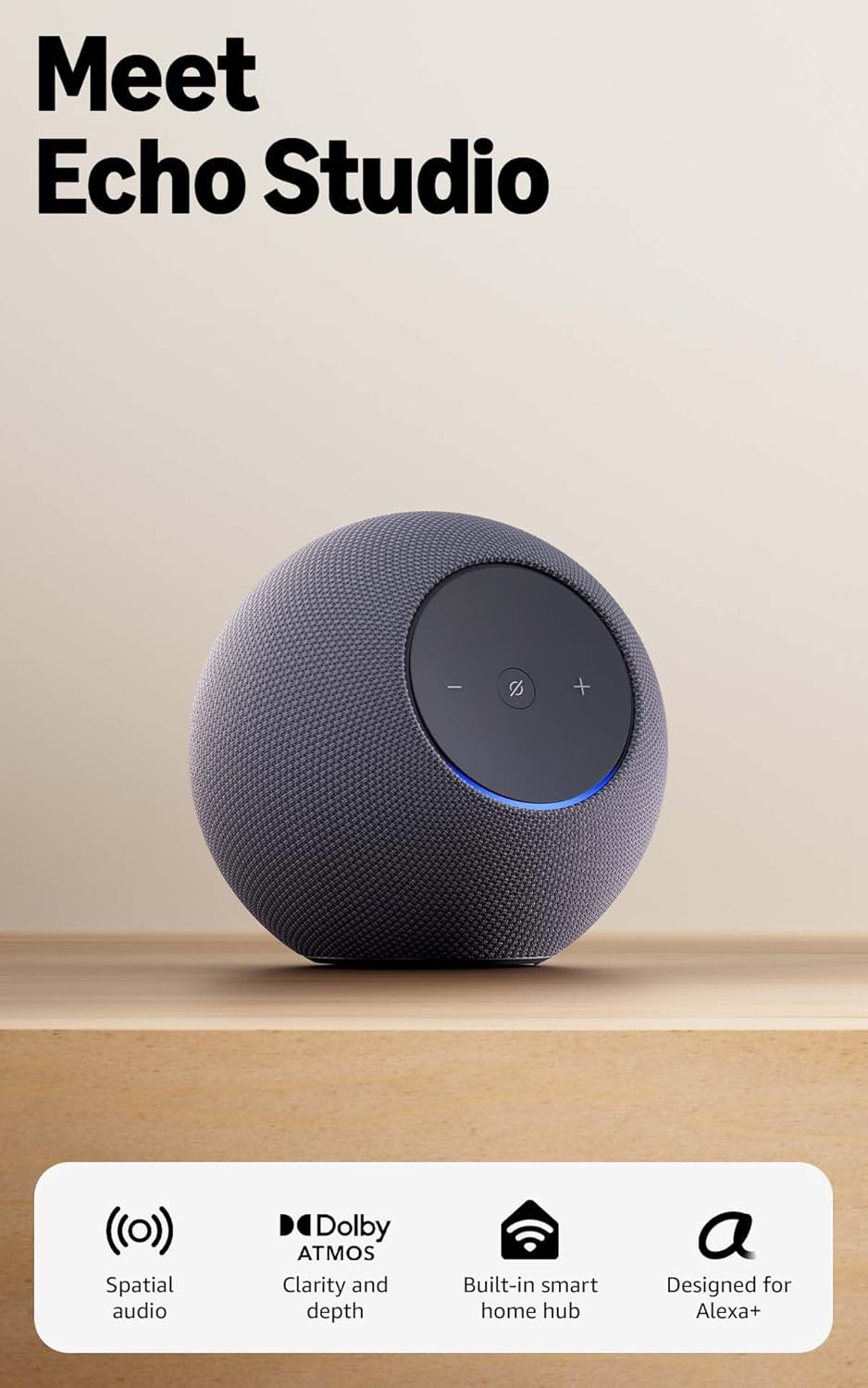
Amazon Echo Studio
Pros
- Dolby Atmos and Sony 360 Reality Audio support
- Five-driver array with upward-firing tweeter
- Spatial audio processing for standard stereo content
- Works as smart home hub with built-in Zigbee
Cons
- Expensive compared to compact options
- Large footprint not ideal for small spaces
- Amazon Music or Apple Music needed for spatial audio tracks
Price as of Feb 27, 2026 — see current price on Amazon.
The Echo Studio is the only smart speaker in this price range that supports both Dolby Atmos and Sony 360 Reality Audio. With five drivers including a 5.25-inch woofer and an upward-firing tweeter, it creates a soundstage that's genuinely wider than what you'd expect from a single-unit speaker.
That upward-firing tweeter isn't a gimmick. Play anything mixed in Atmos on Amazon Music HD and you'll hear instrument separation that flat speakers can't reproduce. It's not a substitute for a real soundbar, but for a bedroom or home office where you want spatial audio without added hardware, it delivers.
The built-in Zigbee hub is a practical bonus. It means you can pair Zigbee smart home devices like Philips Hue lights directly to the Studio without needing a separate hub. For anyone building out a mixed smart home, that's a meaningful cost savings.
Best for: Music enthusiasts who want spatial audio in a single speaker, Alexa power users who want smart home hub functionality built in.
Google Nest Audio
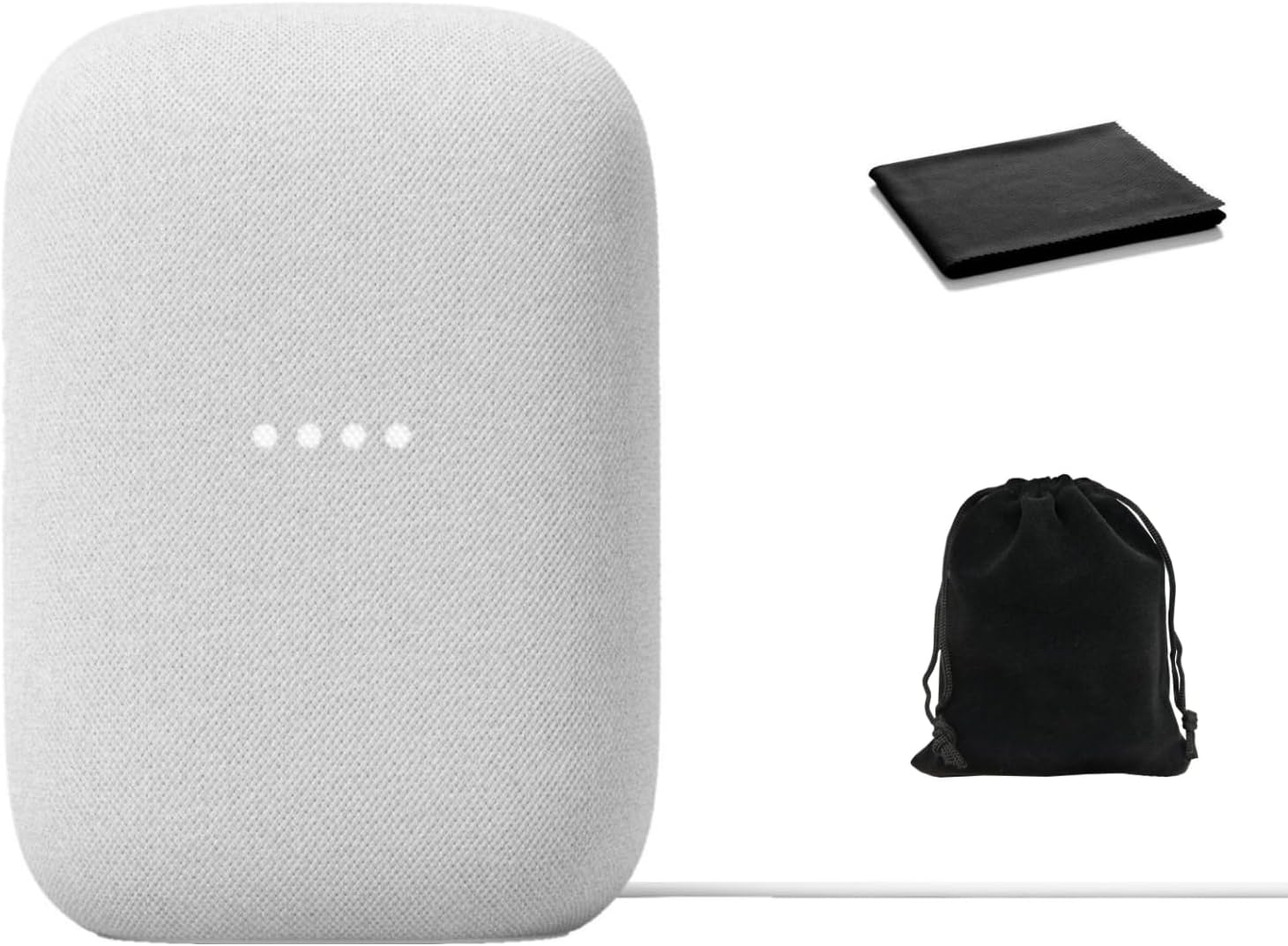
Google Nest Audio
Pros
- 75mm woofer with 19mm tweeter for balanced sound
- Google Assistant handles complex queries better than Alexa
- Stereo pairing with a second Nest Audio is excellent
- Strong YouTube Music and Spotify integration
Cons
- No Thread border router support
- Fabric covering collects dust over time
- Limited HomeKit compatibility without third-party bridges
Price as of Feb 27, 2026 — see current price on Amazon.
The Nest Audio hits a frequency response balance that the Echo Dot Max doesn't quite reach. The 75mm woofer handles bass cleanly without the boom-heavy bias you get from Amazon's lineup, and the 19mm tweeter keeps vocals crisp. For music listening, especially anything with complex midrange detail, it competes well with speakers that cost more.
Google Assistant's natural language understanding is still a step ahead of Alexa for complex queries. Ask it something like "play the album that won Best Alternative Music at the 2024 Grammys" and it usually gets there. Alexa requires more exact phrasing on abstract questions.
Stereo pairing with a second Nest Audio creates a surprisingly good stereo image. Two Nest Audios in a bedroom or kitchen outperform a single Echo Studio for under the same price. If you're buying two speakers anyway, it's worth considering.
The weak point is smart home breadth. Google Home's device compatibility has improved but still trails Alexa for third-party device support. If you're deep in a Google ecosystem (Nest thermostats, Google TV, Android phones), it's a natural fit. If your devices are mixed, expect occasional integration gaps.
Best for: Android and Google Home households, music listeners who want accurate midrange, anyone interested in stereo pairing.
Apple HomePod mini
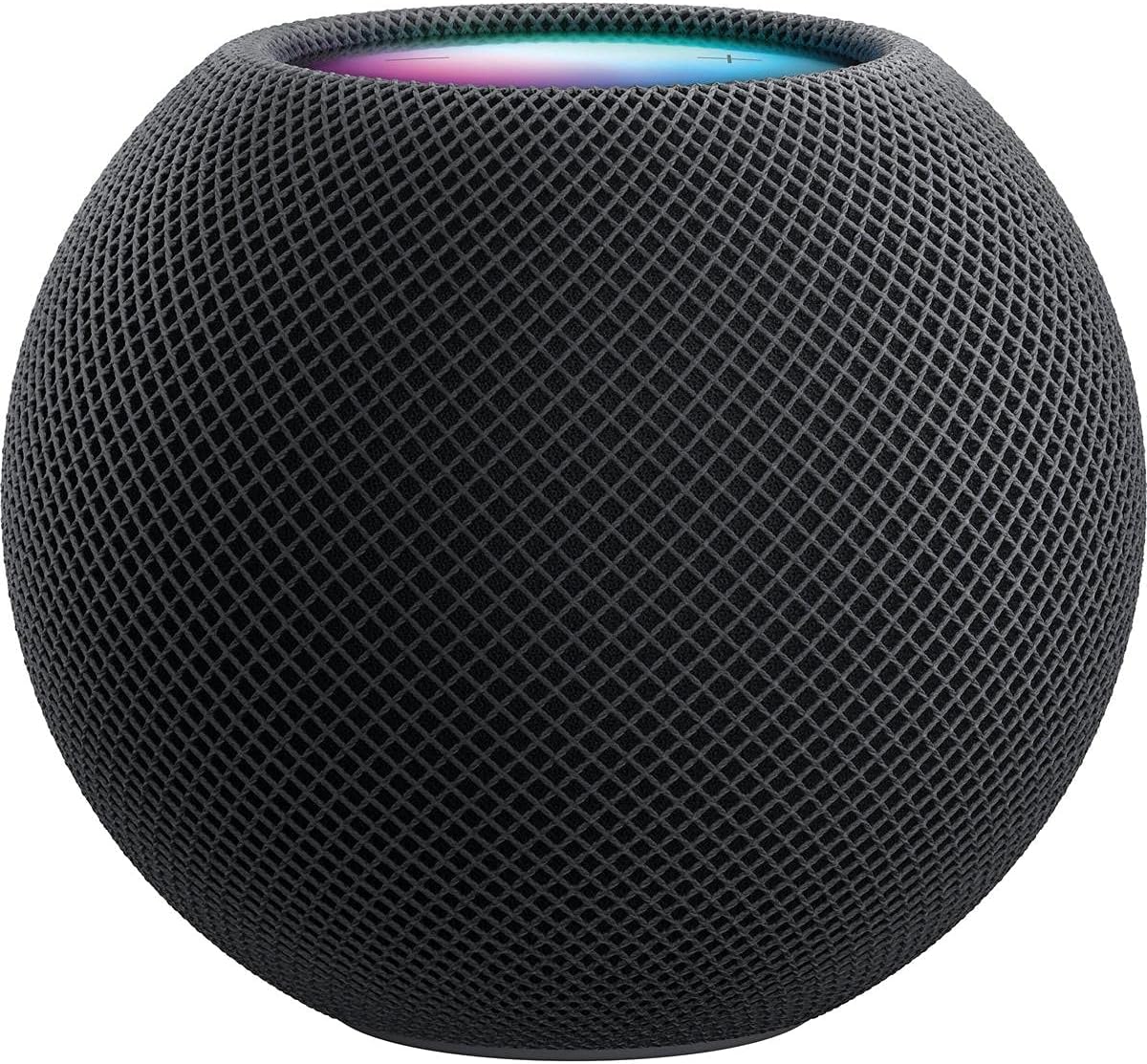
Apple HomePod mini
Pros
- U1 chip enables seamless iPhone audio handoff
- Deep HomeKit and Matter integration
- Spatial audio with Dolby Atmos on Apple Music
- Small enough to fit anywhere
Cons
- Siri struggles more than Alexa or Google on third-party queries
- Best features require iPhone and Apple Music subscription
- No physical volume control without app or voice
Price as of Feb 27, 2026 — see current price on Amazon.
The HomePod mini does one thing better than anything else in this roundup: iPhone handoff. Walk into a room playing music on your phone, and the speaker transitions the audio automatically via the U1 chip. No tap required. It's the kind of feature that seems minor until you use it daily, and then you miss it on every other speaker.
For Apple households, it's the obvious choice. HomeKit automations run locally on the device rather than through cloud servers, which makes them faster and more reliable than cloud-dependent automations on Alexa or Google. Turn off the lights when the last iPhone leaves the house and it actually works consistently.
Sound quality at this price is good but not exceptional. Bass is controlled rather than deep, and at high volumes there's a ceiling that the Nest Audio and Echo Dot Max don't hit. For background music and voice commands, it's more than enough. For serious listening, the HomePod 2nd gen is a better fit.
Best for: iPhone users who are already in the Apple ecosystem, HomeKit automation setups, small spaces where size matters.
Apple HomePod 2nd Generation
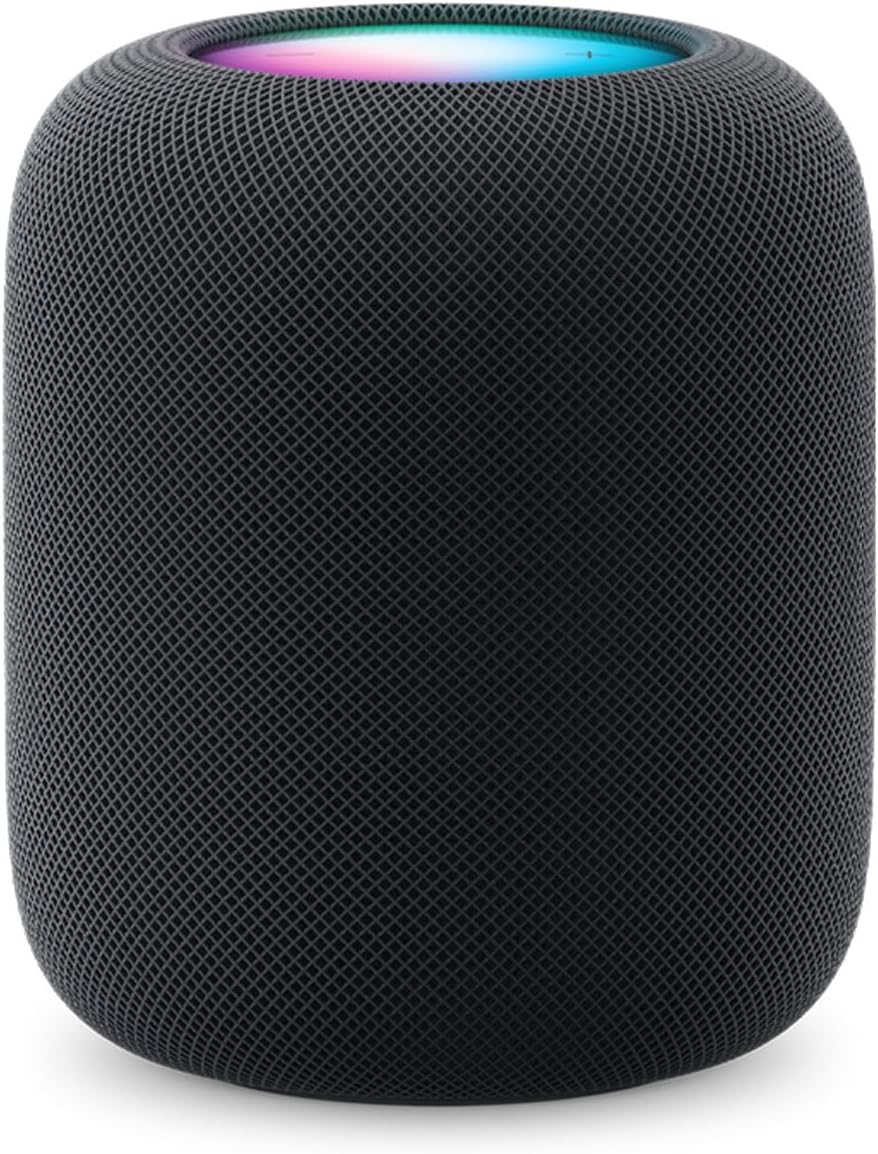
Apple HomePod 2nd Generation
Pros
- Best-in-class sound quality for a smart speaker at this size
- Temperature and humidity sensor built in
- Spatial audio with Dolby Atmos and Apple Music
- Intercom and multiroom audio sync reliably across Apple devices
Cons
- Requires Apple Music for the best audio experience
- No hands-free Siri setup without iPhone
- Expensive compared to alternatives with similar voice assistant quality
Price as of Feb 27, 2026 — see current price on Amazon.
If sound quality is the primary concern, the HomePod 2nd gen is the best smart speaker in this roundup. The custom-designed high-excursion woofer and beamforming array of tweeters create room-filling sound that the more compact options in this list can't match. Spatial audio on Apple Music tracks is genuinely impressive.
The 2023 redesign also added a temperature and humidity sensor, which feeds directly into HomeKit automations. You can trigger fans, adjust thermostats, or get alerts based on actual room conditions without buying separate sensors. It's a practical addition that justifies some of the price premium for smart home users.
The limitation is ecosystem lock-in. You need an iPhone to set it up, and you need Apple Music or a Dolby Atmos-compatible service to hear spatial audio. For Android users or people without an Apple Music subscription, this speaker's advantages don't fully materialize.
At $299, it's twice the price of the Nest Audio and HomePod mini. The sound gap is real, but it only matters if music quality is your primary use case.
Best for: Apple Music subscribers who want the best sound quality in a smart speaker, HomeKit power users, anyone replacing a desktop Bluetooth speaker with something smarter.
How to choose a smart speaker
Match the assistant to your ecosystem first
This is the most important decision. Alexa integrates with the widest range of smart home devices and has the deepest third-party support. Google Assistant handles natural language better and works best in Android and Google Home environments. Siri is fastest for Apple device control and has the most reliable local HomeKit automation. Pick the assistant your devices already use, and the specific speaker almost doesn't matter.
Sound quality scales with price but not linearly
The Echo Dot Max and Google Nest Audio are both around $100 and both sound substantially better than budget Bluetooth speakers. Jumping from $100 to $220 (Echo Studio) is noticeable for music but less meaningful for voice commands. The HomePod 2nd gen at $299 has genuinely better sound than everything else here, but only if you're using it as a primary music speaker.
Stereo pairing changes the math
Two Nest Audios in stereo cost roughly $200 and outperform a single Echo Studio for music playback. Two Echo Dot Maxes in stereo cost the same $200 and add home theater extension via Fire TV pairing. Before buying a single premium speaker, consider whether two mid-range speakers in stereo would serve your use case better.
Smart home hub features matter if you have lots of devices
The Echo Studio's built-in Zigbee hub and the Echo Dot Max's Thread border router capability are practical upgrades for smart home users. If you have Zigbee lights or Matter devices, a speaker that handles hub duties saves you the cost of a separate hub. The HomePod mini and HomePod 2nd gen handle Matter natively but don't support Zigbee.
FAQ
Frequently asked questions
- Which smart speaker works best for music?
- The Apple HomePod 2nd Gen has the best raw sound quality, especially with Dolby Atmos tracks on Apple Music. For the $100 range, the Google Nest Audio has the most balanced frequency response. The Echo Studio is the best option if you want Dolby Atmos without paying Apple's premium.
- Can you mix smart speakers from different brands?
- Physically yes, but assistants don't cross over. An Echo Dot Max and a HomePod mini in the same house will each respond to their own wake word. Multi-room audio only works within the same ecosystem: Echo speakers group with Echo speakers, HomePods group with HomePods. For a truly unified audio system, stick to one brand.
- Is Alexa or Google Assistant better for smart home control?
- Alexa supports more third-party smart home devices, making it better for mixed or non-Apple setups. Google Assistant handles complex conversational queries more naturally. For Apple HomeKit devices, neither compares to Siri's local, fast execution. The best answer depends on which brands of devices you already own.
- Do smart speakers work without a subscription?
- Yes, all basic features work without a subscription: playback from free tiers of Spotify or Amazon Music, smart home control, timers, and alarms. Premium features like Dolby Atmos spatial audio on Amazon Music, Apple Music Lossless, or Alexa+ conversational upgrades require paid subscriptions.
- What is the difference between HomePod mini and HomePod 2nd gen?
- The HomePod mini is a compact $99 speaker best for voice commands, HomeKit automation, and background music. The HomePod 2nd gen is a full-size $299 speaker with substantially better bass, a temperature sensor, and spatial audio support. If sound quality matters to you and you're an Apple Music subscriber, the upgrade is worth it.
Verdict
For most people, the Amazon Echo Dot Max is the smart speaker to buy in 2026. It hits the right balance of sound quality, smart home depth, and price. The bass upgrade over the standard Echo Dot is meaningful, Thread border router support is a genuine smart home benefit, and the Alexa ecosystem breadth gives you the most flexibility as you add more devices.
If you're building a Google Home setup or want more accurate midrange reproduction, the Google Nest Audio is the equal alternative at the same price. Apple users with an iPhone and Apple Music subscription should consider the HomePod mini first, with the HomePod 2nd Gen as a clear upgrade if sound quality is a priority.
The Echo Studio sits in an awkward position: better sound than the Echo Dot Max but not as polished as the HomePod 2nd gen at a similar price. It makes the most sense for Alexa users who want spatial audio and have Zigbee devices to connect.
See also: Best Smart Home Hubs 2026 | Best Soundbars 2026 | Best Streaming Devices 2026
How We Pick
We pick products by combining spec-level research, price checks, trusted third-party benchmarks, and owner sentiment from high-signal sources.
- Performance and real-world value in the category this guide targets
- Price-to-performance and deal consistency over recent pricing windows
- Build quality, reliability patterns, and known long-term issues
- Recommendation refresh cadence to keep these picks current
Author
TheTechSearch Editorial Team
Independent product reviewers & PC builders
We compare real-world specs, reviews and owner reports, price trends, and user feedback to recommend gear that actually makes sense to buy.