Best Video Doorbells 2026: Ring, Arlo, Eufy, and Google Nest Compared
Best video doorbells in 2026. Eufy E340 wins for no-subscription local storage. Ring 4K, Arlo 2K, and Google Nest compared by price and features. Expert pick...
As an Amazon Associate we earn from qualifying purchases made through our links — this doesn't affect our picks.
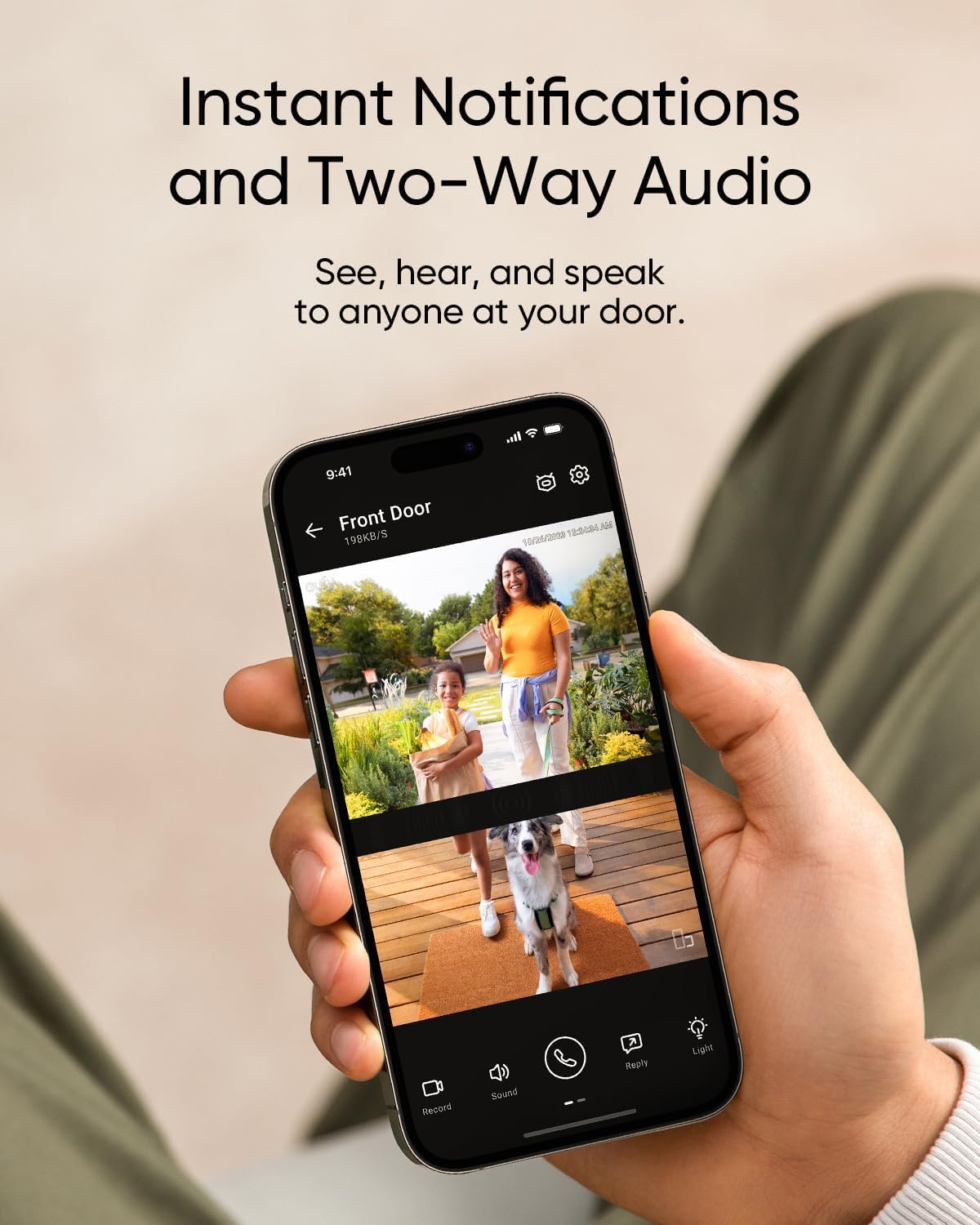
eufy Security Video Doorbell E340, 2K Full HD Dual Cameras and No Monthly Fee
Our top recommendation for this category
Price as of Feb 27, 2026 — see current price on Amazon.
In this guide
- Our top picks at a glance
- Best Overall: Eufy Video Doorbell E340
- Best Premium Wired Doorbell: Ring Wired Doorbell Pro (4K)
- Best Budget and Wire-Free Pick: Arlo Video Doorbell 2K (2nd Gen)
- Best for Google Home: Google Nest Doorbell (Wired, 3rd Gen)
- The real cost of video doorbell subscriptions
- How to choose the right video doorbell
- Frequently Asked Questions
- The verdict
Most video doorbells will sell you the hardware at a discount and then charge $10 to $20 per month for the subscription that makes them useful. Without cloud storage, you get live view and motion alerts but no video history. The subscription is where the real cost lives, and over three to five years, it adds $360 to $1,200 on top of the purchase price.
Eufy has changed that calculation. The E340 records locally to a HomeBase hub with no monthly fee and adds a second dedicated camera lens for package detection alongside the main 2K doorbell feed. At $129 retail, you pay once and own the full feature set. For anyone who has been avoiding video doorbells because of the subscription model, the E340 is the reason to reconsider.
This guide compares all four major video doorbell platforms across video quality, motion detection reliability, subscription requirements, installation difficulty, and smart home ecosystem integration to find the right pick for each use case.
Our top picks at a glance
| Doorbell | Resolution | Subscription Required? | Best For | Price | |
|---|---|---|---|---|---|
| Eufy Video Doorbell E340 | 2K HD | No (local storage) | Best Overall / No Subscription | ~$130 | Check Price |
| Ring Wired Doorbell Pro | 4K | Optional (Ring Protect plan) | Best Premium Wired | ~$250 | Check Price |
| Arlo Video Doorbell 2K (2nd Gen) | 2K HD | Optional (Arlo Secure plan) | Best Budget / Wire-Free | ~$50 | Check Price |
| Google Nest Doorbell (Wired, 3rd Gen) | 2K HD | Optional (Google Home Aware) | Best for Google Home | ~$180 | Check Price |
Best Overall: Eufy Video Doorbell E340
The Eufy Video Doorbell E340 resolves the biggest objection to video doorbells: the monthly subscription. Where Ring, Arlo, and Nest all charge for video history storage, Eufy records video locally to a HomeBase hub, retaining event clips for as long as you want with no recurring cost. That eliminates $120 to $240 per year in subscription fees that competing doorbells require for their most useful features.
The E340 ships with two camera lenses, a design that no other doorbell in this price range offers. That main lens captures the full frame at 2K resolution, covering the person at the door with head-to-toe coverage. The second lens points down at a 150-degree angle to capture the ground in front of the door separately, giving you both a face view and a simultaneous package view without switching or cropping. This dual-view display is genuinely useful for package delivery confirmation in a way that single-lens doorbells with software crop cannot match.
Video quality in daylight is sharp with accurate color rendering. Color night vision, using a low-light color sensor rather than infrared, produces more usable footage in low-light conditions than black-and-white night vision for identifying clothing colors or vehicle colors at night. Two-way audio uses noise-canceling technology that cuts wind noise, which is a meaningful quality-of-life improvement for doorbells mounted in exposed positions.
Delivery Guard, Eufy's AI motion detection feature, recognizes package delivery events specifically and sends a dedicated notification when a package is set down and another when it is picked up. This reduces the noise of false motion alerts from passing cars or tree movement while flagging the events that matter.
Installation requires existing doorbell wiring or the optional HomeBase 3 battery configuration. Compatibility with Amazon Alexa, Google Assistant, and Apple HomeKit means the E340 integrates into any major smart home platform. The HomeBase 3 hub supports local expandable storage up to 16TB via hard drive expansion.
At $130, the Eufy E340 is not the cheapest video doorbell here, but when you factor in the zero subscription cost against Ring or Nest over three years, it is the most cost-effective choice by a significant margin.
eufy Security Video Doorbell E340, 2K Full HD Dual Cameras and No Monthly Fee
Pros
- No monthly subscription: video history stored locally to HomeBase hub at no recurring cost
- Dual camera design: separate lenses for face view and package/ground view simultaneously
- Color night vision produces more detailed low-light footage than standard IR
- Delivery Guard AI recognizes package events specifically to reduce false alerts
- Works with Alexa, Google Assistant, and Apple HomeKit
Cons
- Requires HomeBase hub for local storage (sold with doorbell in most bundles)
- 2K rather than 4K video resolution compared to the Ring Wired Doorbell Pro
- Installation requires existing doorbell wiring or battery configuration
Price as of Feb 27, 2026 — see current price on Amazon.
Best Premium Wired Doorbell: Ring Wired Doorbell Pro (4K)
The Ring Wired Doorbell Pro is Ring's flagship wired video doorbell, and the upgrade to 4K video resolution is the headline feature. At $249, it is the most expensive single unit here, and the image quality justifies the price for anyone who wants the clearest possible view of who is at their door. 4K captures license plate numbers from street level, reads delivery labels on packages, and provides enough detail to make a positive ID on a face in poor lighting conditions that 2K footage cannot match.
Ring's motion detection uses 3D motion technology, which detects distance and direction rather than just pixel change. This means it can filter out cars passing on the street while catching a person walking toward the door, reducing false alerts in high-traffic environments where standard motion detection would fire constantly.
Head-to-toe video coverage captures the full body in the frame, not just a face crop, which is useful for identifying clothing and physical details in the event you need to review footage. The enhanced audio system uses noise cancellation and a clearer speaker for two-way conversations that sound less like a speakerphone.
The installation footprint is slim and modern, with a design that fits flush on most door frames. Ring Protect subscription plans start at $5 per month per device for 30 days of video history, or $10 per month for the Protect Plus plan covering all Ring devices on the property. Without a subscription, you get live view and motion alerts but no stored video history. The subscription cost is real and ongoing. Budget for it when comparing against the Eufy E340 at zero recurring cost.
Alexa integration is the strongest here among the four doorbells, given Amazon's ownership of Ring. You can answer the door via any Echo Show screen, play recorded video on an Echo Show without opening the Ring app, and use Alexa Greetings to send a pre-recorded message when you are unavailable.
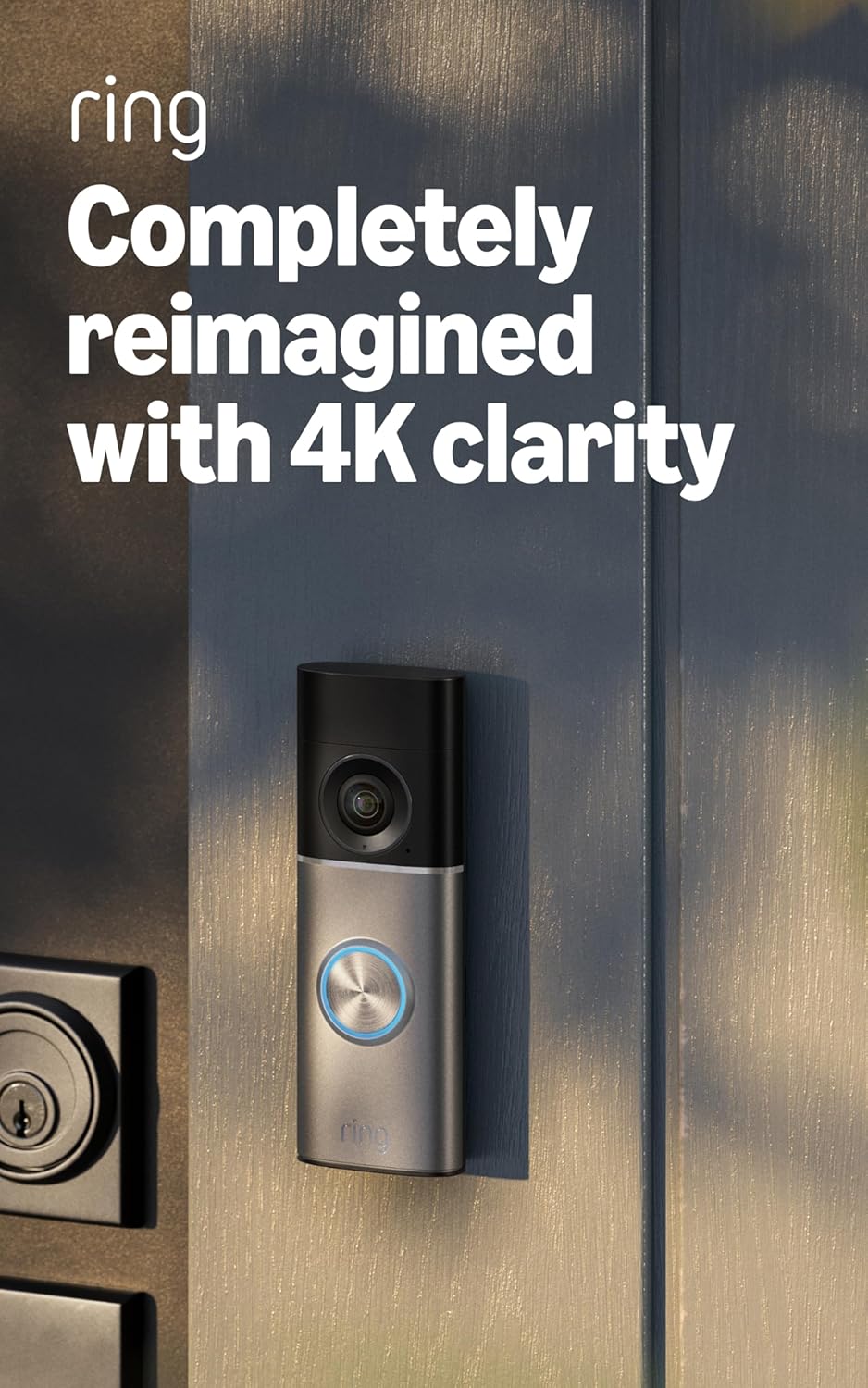
Ring Wired Doorbell Pro, 4K Video Doorbell with Enhanced Audio
Pros
- 4K video resolution: best image quality of the four doorbells in this guide
- 3D motion detection filters by distance and direction, reducing false alerts significantly
- Head-to-toe coverage captures full body frame for identification detail
- Best-in-class Alexa integration with Echo Show door answering
- Slim, flush-mount design fits most standard door frames cleanly
Cons
- Subscription required for video history: Ring Protect plan adds $5 to $10 per month
- Requires existing doorbell wiring, no battery option on this model
- Most expensive option here at $250 before the ongoing subscription cost
Price as of Feb 27, 2026 — see current price on Amazon.
Best Budget and Wire-Free Pick: Arlo Video Doorbell 2K (2nd Gen)
At $50, the Arlo Video Doorbell 2K (2nd Gen) is the least expensive option in this guide and the only one that supports fully wire-free installation as a first-class feature rather than an afterthought. No existing doorbell wiring is required. The included rechargeable battery handles installation anywhere on a door frame, gate, or exterior wall without running new wiring.
Video quality at 2K is equivalent to the Eufy E340 and the Nest Doorbell in standard conditions. The 180-degree field of view is wider than most competing doorbells, capturing more of the area in front of the door including steps, porches, and adjacent sidewalks in the frame. Head-to-toe view at this field of view gives you full-body context at the cost of some edge distortion, which is an acceptable trade-off at this price.
Person and vehicle recognition, package detection, and 1-on-1 video calling are available without a subscription for basic motion alerts and live view. Arlo Secure plans start at $5 per month per camera for 30 days of cloud video storage. Without Arlo Secure, you get motion push alerts with a thumbnail image but no stored clips for review, which limits the practical usefulness of the subscription-free tier. This is a better no-subscription experience than Ring (which gives you nothing) but worse than Eufy (which gives you full local video history).
The wire-free installation means this doorbell goes wherever you need it, including apartments, rental properties, side entrances, and gates that other doorbells cannot reach without significant electrical work. The Arlo app is polished and the two-way audio is clear. Battery life with the included rechargeable pack runs two to three months under typical usage conditions before needing a recharge.
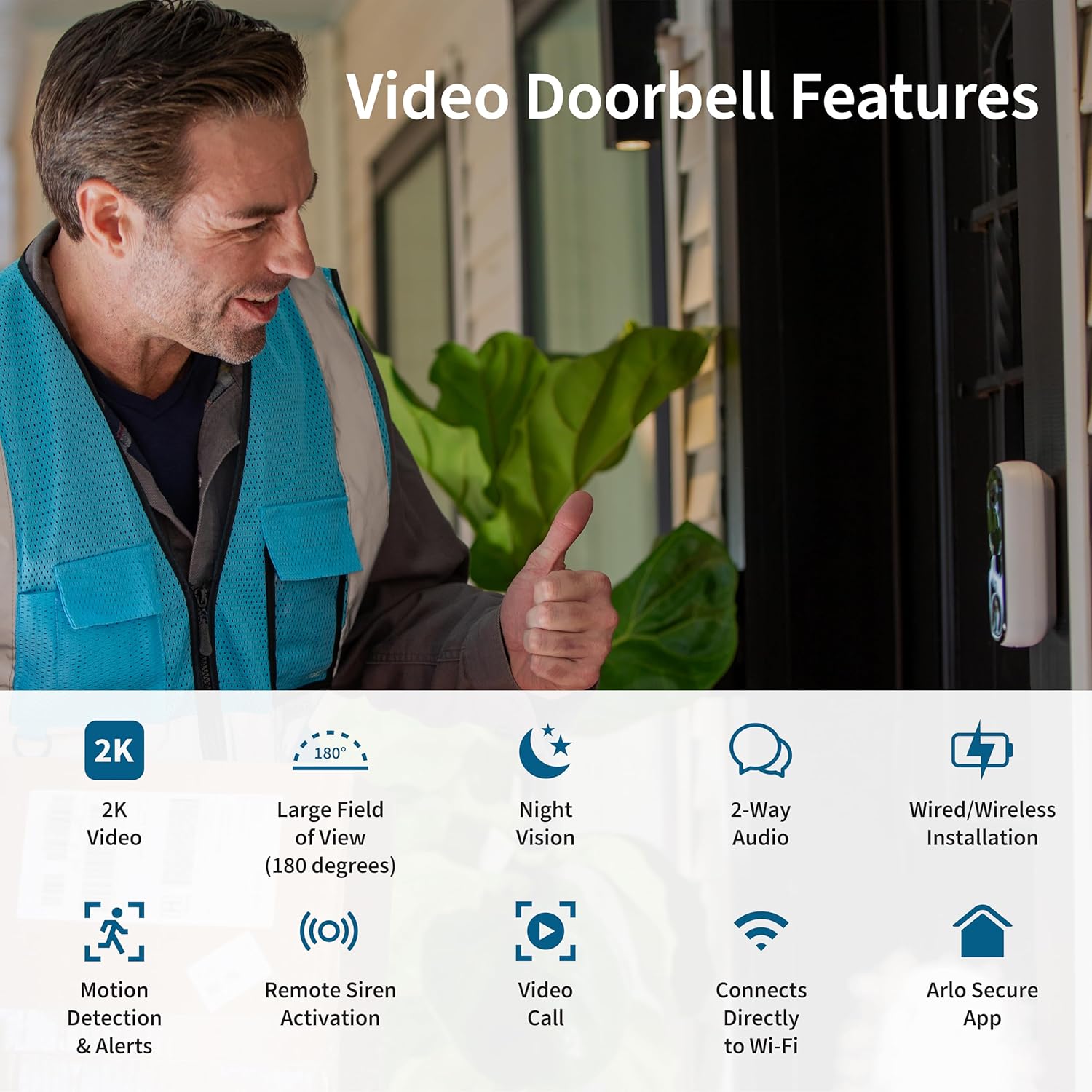
Arlo Video Doorbell 2K (2nd Gen) Wireless or Wired with Package Detection and Night Vision
Pros
- Wire-free installation: runs on rechargeable battery, no existing wiring required
- Widest field of view of the four doorbells at 180 degrees
- Person, vehicle, and package detection included without subscription
- Two to three month battery life between charges
- Works with Alexa, Google Assistant, and Apple HomeKit
Cons
- Cloud video history requires Arlo Secure subscription at $5 per month per camera
- No local storage option unlike Eufy's HomeBase approach
- Battery needs periodic recharging every 2 to 3 months
Price as of Feb 27, 2026 — see current price on Amazon.
Best for Google Home: Google Nest Doorbell (Wired, 3rd Gen)
The Google Nest Doorbell (Wired, 3rd Gen) is the 2025 model with Gemini AI integration, making it the most intelligent doorbell in this guide for natural language search and event categorization. Unlike the previous generation, this model uses Gemini to label events with descriptive context rather than simple categories. Instead of "Person detected," it can log "Person in blue jacket carrying packages at 2:43 PM," giving you searchable, detailed event history.
Live View provides a continuous video stream from the doorbell at any time without waiting for a motion event to trigger recording. On smart displays like the Nest Hub Max or Google TV, the doorbell feed appears automatically when motion is detected. You can also pull it up by saying 'Hey Google, show me the front door'. For households with Google Home displays, this integration feels native in a way no competing doorbell manages.
The wired installation provides consistent power for 24/7 continuous recording on the Google Home Aware plan. That plan starts at $8 per month and covers all Nest cameras and doorbells on the account. It is a multi-device plan rather than per-device, which makes it cost-competitive with Ring if you have multiple Nest cameras. Without a subscription, you receive three hours of event video history at no charge, which is more free storage than Ring or Arlo offer without a plan.
Video quality at 2K HDR is clean and accurate. Night vision handles low-light conditions well. Two-way audio is clear for conversations, and the doorbell chimes work with existing in-home Nest speakers without additional hardware setup.
For Android users and households already running Google Home, Nest cameras, or Nest Thermostat, the Nest Doorbell (Wired, 3rd Gen) creates a unified security and smart home experience that is harder to replicate with other platforms.
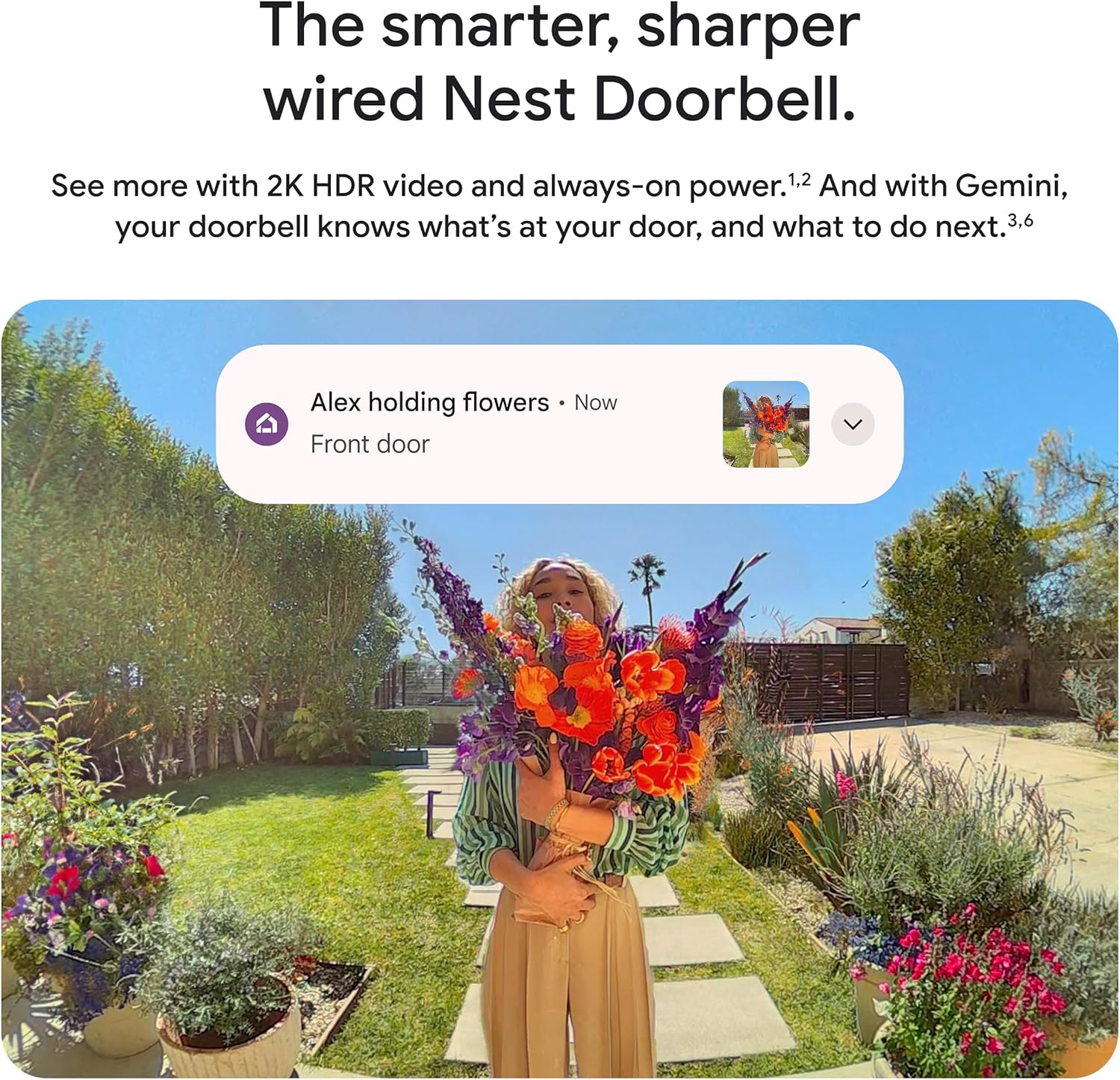
Google Nest Doorbell (Wired, 3rd Gen) with 2K Video and Gemini AI - 2025 Model
Pros
- Gemini AI event labeling produces descriptive, searchable event history
- Live View available at any time from Google Home app or smart displays
- Google Home Aware plan covers all Nest cameras (not per-device), cost-effective multi-camera households
- Three hours of free event video history included without any subscription
- Best Google and Android ecosystem integration of any doorbell
Cons
- Requires existing wiring: no battery option on the wired model
- Full 24/7 continuous recording requires Google Home Aware subscription at $8 per month
- Google ecosystem lock-in: Gemini features work only within the Google Home app
Price as of Feb 27, 2026 — see current price on Amazon.
The real cost of video doorbell subscriptions
The sticker price on a video doorbell is rarely what you actually pay. Every major platform except Eufy charges a monthly fee for the feature that makes the doorbell worth owning, specifically the ability to review recorded video after the fact.
Here is the honest three-year cost for each doorbell:
Eufy E340 ($130): $130 total over three years. No recurring fees. Full video history stored locally.
Ring Wired Doorbell Pro ($250): $250 plus Ring Protect Basic at $5 per month = $250 + $180 = $430 over three years. Ring Protect Plus at $10 per month brings it to $250 + $360 = $610 for unlimited device coverage over three years.
Arlo 2K ($50): $50 plus Arlo Secure at $5 per month per camera = $50 + $180 = $230 over three years. Without Arlo Secure, you lose stored video history.
Google Nest Wired 3rd Gen ($180): $180 plus Google Home Aware at $8 per month = $180 + $288 = $468 over three years. The Aware plan covers all Nest cameras, so if you have two or three Nest cameras, the cost per device drops significantly.
The subscription math changes the value ranking substantially. The Arlo at $230 total beats the Ring at $430 to $610 on cost alone if you are equipping one camera position. Eufy at $130 flat beats both by a wide margin. Nest makes more financial sense if you have multiple Nest cameras on the same account.
How to choose the right video doorbell
Do you need wired or battery power?
Wired doorbells (Ring Wired Doorbell Pro, Google Nest Wired 3rd Gen) draw continuous power from existing doorbell wiring (typically 8 to 24V AC), which supports 24/7 continuous recording and eliminates battery management. If your home has existing doorbell wiring, a wired model delivers more consistent recording performance.
Wire-free doorbells (Arlo 2K) install anywhere with no wiring requirement. They record on motion events rather than continuously, and you manage battery recharging every two to three months. For rentals, apartments, or positions without wiring access, wire-free is the only practical option.
The Eufy E340 supports both configurations depending on the bundle you purchase.
Does the subscription cost matter to you?
If you will use the doorbell for three or more years, subscription cost is the most important financial factor after the purchase price. For a single doorbell position, Eufy's no-subscription model saves $180 to $360 over three years compared to Ring or Arlo, and those savings compound over a longer time horizon.
If you are already paying for a Google Home Aware plan or a Ring Protect Plus plan that covers multiple devices, adding another camera to that plan costs nothing incremental, which changes the math in favor of staying within your existing ecosystem.
Which smart home platform do you use?
All four doorbells here support Alexa and Google Assistant for basic commands. Apple HomeKit support is available on Eufy and Arlo, and is absent on Ring and Nest (without workarounds). If you run a HomeKit home, Eufy and Arlo are the only clean options in this guide.
For Alexa households, Ring's Alexa integration is the deepest, with Echo Show door-answering, two-way talk from Echo displays, and Alexa Greetings. For Google Home households, Nest's Live View on smart displays and Gemini-powered event labeling are the clearest ecosystem advantages.
What resolution do you actually need?
The jump from 2K to 4K in a doorbell context is meaningful for one specific use case: reading license plate numbers or delivery label text at distance. For standard face identification, two-way conversations, and package detection, 2K HD from the Eufy, Arlo, or Nest delivers more than adequate detail. The Ring Wired Doorbell Pro's 4K justifies the premium only if license plate capture or extreme detail at range matters for your specific situation.
How important is installation complexity?
Standard video doorbell installation takes 15 to 30 minutes for a wired doorbell with existing wiring. If you have never worked with low-voltage wiring, it is straightforward: turn off the circuit breaker, disconnect the two wires from the old doorbell button, connect them to the new doorbell terminals, and restore power. Most homes built after 1970 have existing wiring. Homes without existing doorbell wiring will need battery-powered models.
Frequently Asked Questions
Frequently asked questions
- Which video doorbell has no monthly fee?
- The Eufy Video Doorbell E340 is the strongest no-subscription option. It records video history locally to a HomeBase hub, storing event clips indefinitely with no cloud storage plan required. Most other video doorbells (Ring, Arlo, Nest) provide only live view and motion alerts without a subscription. You need to pay $5 to $10 per month to access stored video history on those platforms.
- Can I use a video doorbell without existing wiring?
- Yes. The Arlo Video Doorbell 2K (2nd Gen) runs entirely on a rechargeable battery with no wiring required. The Eufy E340 also supports a battery-powered configuration with certain bundles. Ring Wired Doorbell Pro and Google Nest Doorbell (Wired, 3rd Gen) both require existing doorbell wiring between 8 and 24V AC and cannot be installed battery-free.
- What is the best video doorbell for Apple HomeKit?
- The Eufy Video Doorbell E340 and the Arlo Video Doorbell 2K (2nd Gen) both support Apple HomeKit, making them the two choices for households running HomeKit. Ring and Google Nest do not natively support HomeKit without workarounds. Of the two HomeKit-compatible options, Eufy offers local storage at no subscription cost, which is the better long-term value.
- Does Ring work without a subscription?
- Ring doorbells provide live view, two-way audio, and motion push alerts without a subscription. However, you cannot review any recorded video without a Ring Protect plan. Without the subscription, you will receive a motion alert notification but clicking through will not show you the recorded clip. Ring Protect Basic starts at $5 per month per device.
- How long does a battery-powered video doorbell last between charges?
- The Arlo Video Doorbell 2K (2nd Gen) typically runs two to three months on a single charge under normal usage, defined as 15 to 30 motion events per day. Higher traffic locations, cold weather, and frequent Live View sessions reduce battery life. A spare rechargeable battery allows you to swap and charge without any gap in coverage.
The verdict
The Eufy Video Doorbell E340 is the right pick for most people. At $130 with no subscription and a dual-camera design that captures both the visitor and the delivery package simultaneously, it delivers the core value of a video doorbell at the lowest total cost of ownership in this category. Anyone paying Ring or Arlo subscription fees who has not evaluated Eufy recently is almost certainly leaving money on the table.
The Ring Wired Doorbell Pro at $250 (plus subscription) is the right call if 4K video detail, Amazon Echo integration, and Ring's established ecosystem matter enough to justify the higher hardware and ongoing costs. Image quality is genuinely superior, and the Alexa integration is tighter than any competing platform.
The Arlo Video Doorbell 2K at $50 is the wire-free recommendation and the clearest choice for anyone without existing doorbell wiring. Installation flexibility and a 180-degree field of view at this price are hard to beat.
The Google Nest Doorbell (Wired, 3rd Gen) is the right call for Google Home households. The Gemini AI event labeling and Live View on Google displays create a more integrated home security experience than any other platform provides for Android users.
For context on where a video doorbell fits in a broader home setup, our Best Smart Home Hubs 2026 guide covers the control systems that connect doorbells, locks, and cameras. To pair a doorbell with a TV display for door-answering, see our Best Streaming Devices 2026 guide for how Google TV Streamer and Fire TV handle home security camera feeds. Our Best Tech Gifts 2026 guide includes several smart home picks for households building out security coverage. For the Wi-Fi infrastructure that all four doorbells depend on, see our Best Mesh Wi-Fi Systems 2026 guide for reliable whole-home coverage.
How We Pick
We pick products by combining spec-level research, price checks, trusted third-party benchmarks, and owner sentiment from high-signal sources.
- Performance and real-world value in the category this guide targets
- Price-to-performance and deal consistency over recent pricing windows
- Build quality, reliability patterns, and known long-term issues
- Recommendation refresh cadence to keep these picks current
Author
TheTechSearch Editorial Team
Independent product reviewers & PC builders
We compare real-world specs, reviews and owner reports, price trends, and user feedback to recommend gear that actually makes sense to buy.