Best Wireless Security Cameras 2026: No Wires, No Compromises
The best wireless security cameras for 2026, compared on battery life, night vision, and no-subscription options. Wire-free picks for renters and homeowners.
As an Amazon Associate we earn from qualifying purchases made through our links — this doesn't affect our picks.
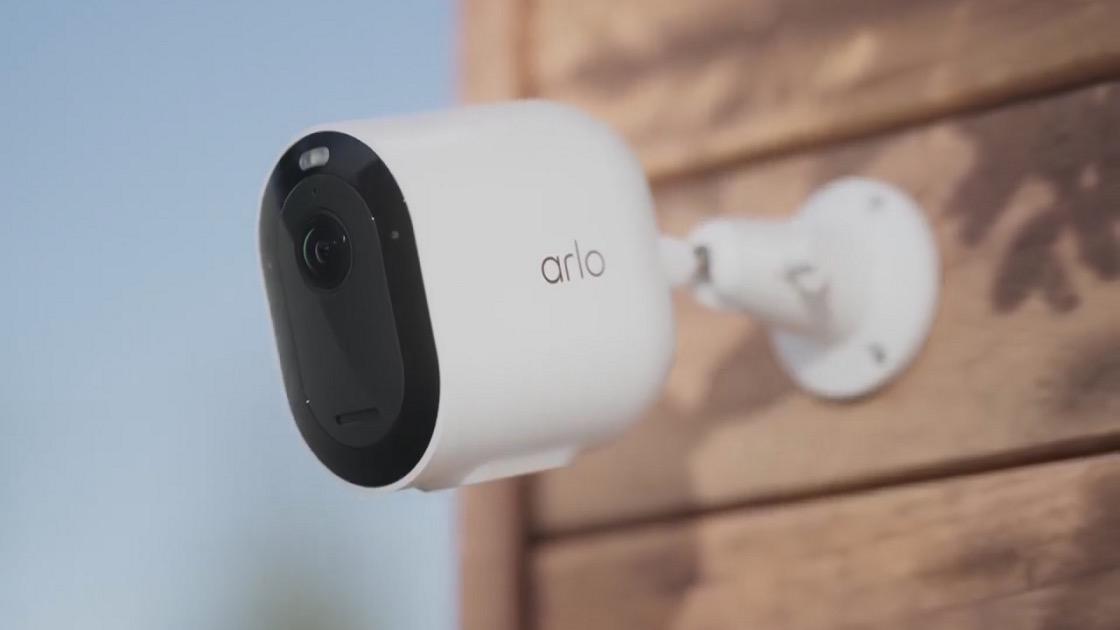
Arlo Pro 5S 2K
Our top recommendation for this category
Price as of Feb 27, 2026 — see current price on Amazon.
Best Wireless Security Cameras 2026: No Wires, No Compromises
Wireless security cameras solve a problem that wired cameras never could: placement flexibility. Mount one on a fence post, tuck one in a corner shelf, stick one above the garage. No outlet required, no drilling through walls for cable runs. The tradeoff is battery management, but the best options today stretch to six months per charge, and the solar-powered ones require no charging at all.
These are the wireless cameras I'd buy in 2026, organized by what matters most: battery life, night vision quality, subscription costs, and whether they actually stay connected when it rains.
Quick Picks
- Best overall: Arlo Pro 5S 2K: color night vision, 6-month battery, works with HomeKit
- Best solar: eufy SoloCam S340: pan/tilt, zero subscription fees, stays charged year-round
- Best wide coverage: Reolink Argus 4 Pro: 180-degree 4K view, solar, no monthly fees
- Best for Ring homes: Ring Stick Up Cam Battery Gen 3: seamless Ring ecosystem, indoor and outdoor
- Best budget: Blink Outdoor 4: two-year battery, clean app, surprisingly sharp for $70
Best Wireless Security Cameras: Full Reviews
1. Arlo Pro 5S 2K (Best Overall)
Arlo Pro 5S 2K
Pros
- Color night vision captures actual detail after dark
- Six-month battery on typical settings
- Works with HomeKit, Alexa, and Google Home
- 160-degree field of view catches wide areas
- Wire-free magnetic mount makes repositioning easy
Cons
- Arlo Secure plan ($8/month) needed for extended cloud history
- Single-cam pricing is steep vs. competitors
Price as of Feb 27, 2026 — see current price on Amazon.
The Arlo Pro 5S 2K is the benchmark for wireless cameras right now. Most competitors still default to grainy black-and-white infrared at night. The Pro 5S uses ColorVision: actual color capture in darkness without a blinding spotlight. You can tell someone is wearing a red jacket at 2 AM without waking the neighbors.
Battery life hits roughly six months with moderate motion activity (10-15 clips per day). The magnetic mount means you reposition it in seconds. Handy if you want to cover the backyard for a summer party and the driveway the rest of the year.
The subscription story is the main catch. Free tier gives you 30 days of rolling cloud clips per camera. For extended history or activity zones, Arlo Secure runs $8/month per camera or $13/month for all cameras. It is not cheap, but the video quality and ecosystem compatibility justify the premium for most buyers.
2. eufy SoloCam S340 (Best Solar Option)
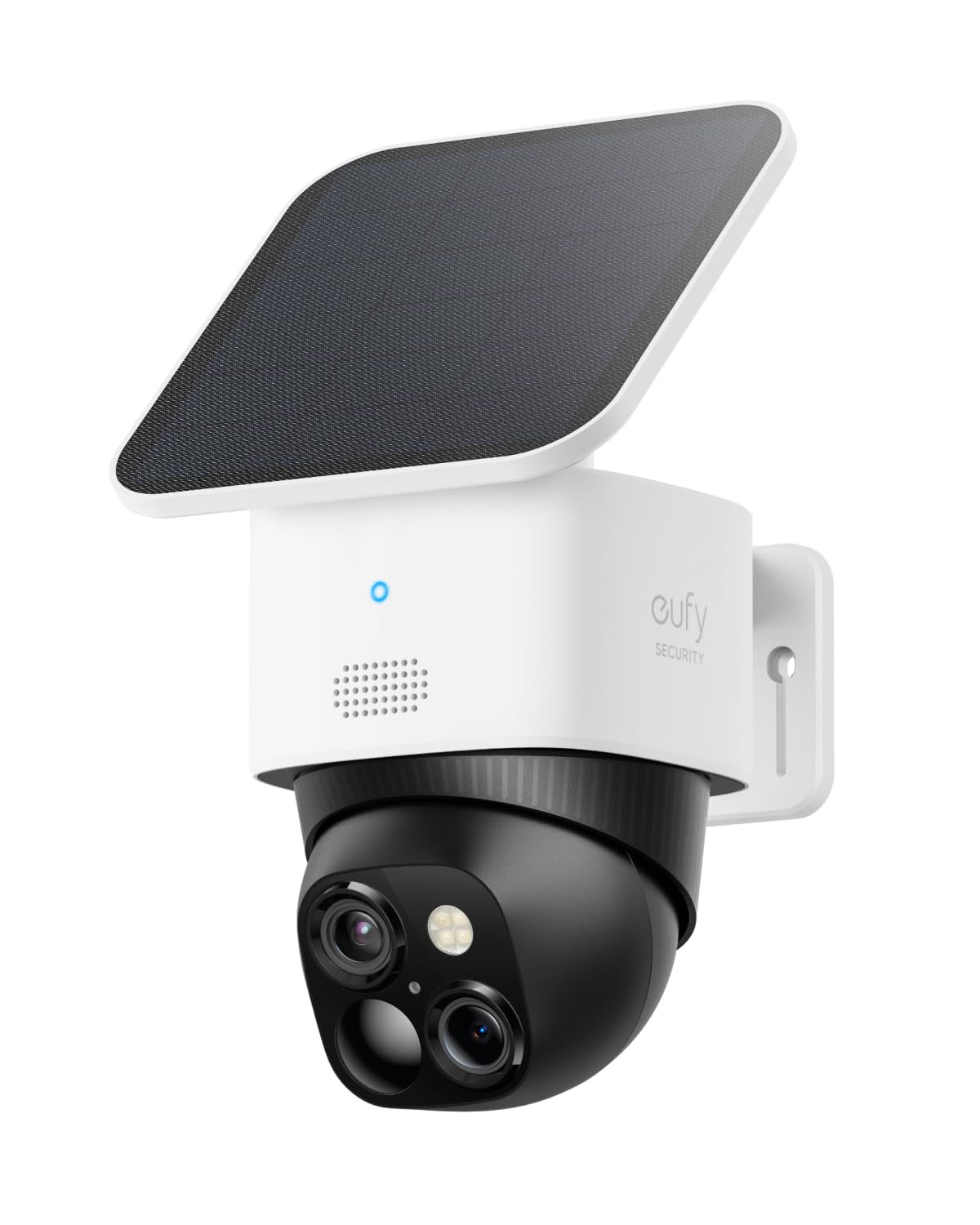
eufy SoloCam S340
Pros
- Solar powered, no battery swaps needed
- Pan and tilt cover 360 degrees without moving your feet
- Zero monthly subscription, local storage included
- Built-in spotlight for color night vision
- AI person, vehicle, and animal detection built in
Cons
- Pan/tilt motor adds bulk vs. fixed cameras
- Needs decent sun exposure for consistent solar charging
Price as of Feb 27, 2026 — see current price on Amazon.
The SoloCam S340 wins for anyone who hates swapping batteries. The built-in solar panel trickle-charges an 18,000 mAh battery continuously. In most climates, you set it up once and never think about charging again. Even through Seattle winters, the combination of battery reserve and solar top-up keeps it running.
The pan-and-tilt mechanism is the standout feature. You control it manually through the eufy app, or it can auto-track motion across a full 360 degrees. One camera covering the whole backyard instead of three fixed ones is a real cost saver.
eufy stores footage locally on a microSD card by default, with no subscription required. Optional cloud backup is available but not mandatory. For buyers wary of monthly fees, this is the clearest value at this price point.
3. Reolink Argus 4 Pro (Best Wide Coverage)
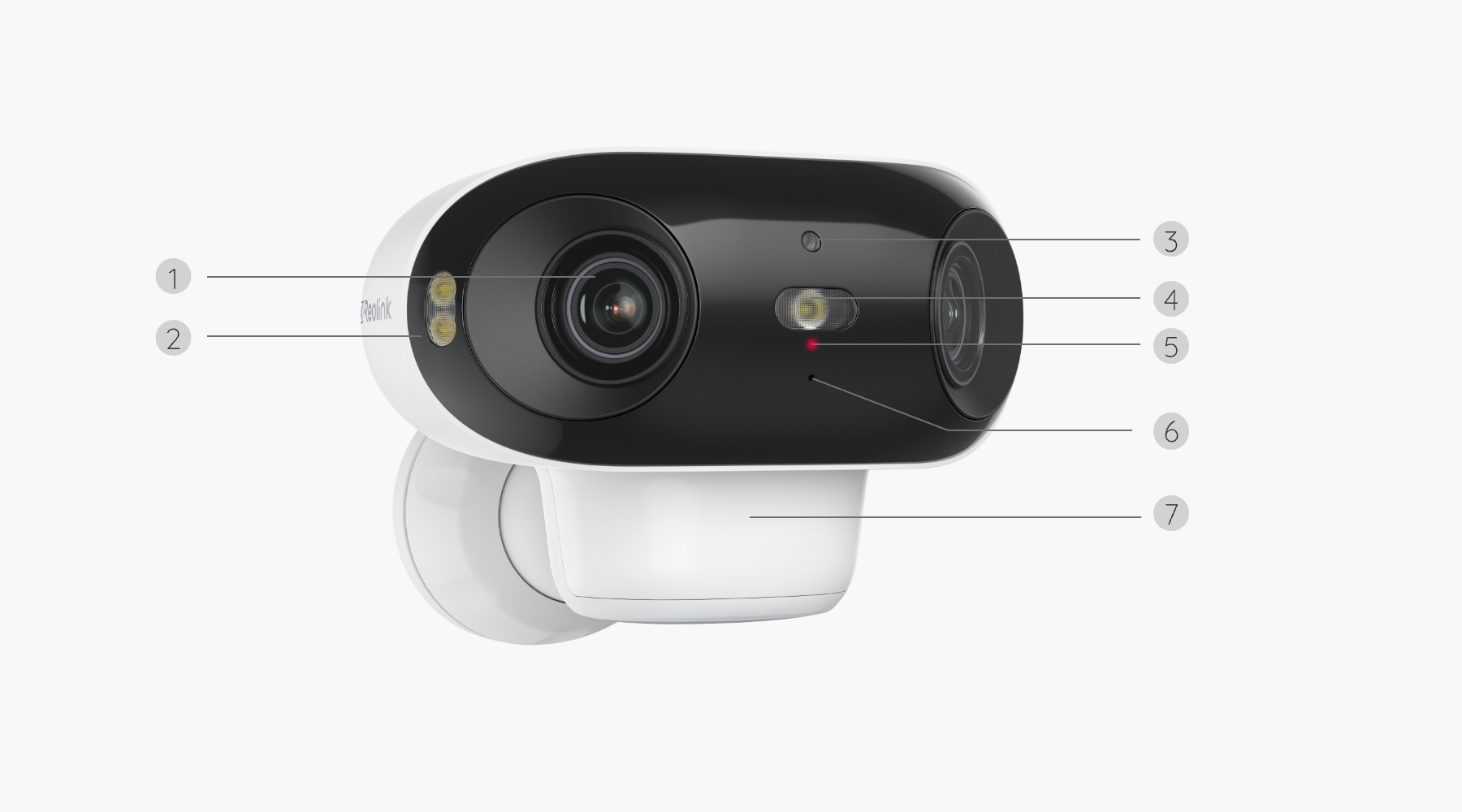
Reolink Argus 4 Pro
Pros
- 180-degree field of view eliminates blind spots entirely
- Dual 4K lenses stitched into one wide image
- ColorX night vision shows full color in near-total darkness
- Solar panel included, WiFi 6 for faster connectivity
- Local SD card storage, no subscription required
Cons
- Higher price than most wireless camera competition
- The stitched wide-angle image can look distorted near edges
Price as of Feb 27, 2026 — see current price on Amazon.
Most security cameras have a 110-130 degree field of view. The Argus 4 Pro uses two lenses stitched into a 180-degree image, which means mounting it at a corner covers both walls simultaneously. No more repositioning to figure out which angle you missed.
The 4K dual-lens setup also means usable digital zoom. You can crop into a specific zone of that wide image and still read a license plate or identify a face. ColorX night vision produces actual color in low-light conditions that would render other cameras completely blind.
Setup is straightforward with the Reolink app, and the included solar panel means you buy once and skip the recharging cycle. Local storage via microSD with optional Reolink cloud plans if you want remote backup. At $220 it is the priciest pick on this list, but the coverage footprint of one Argus 4 Pro often replaces two standard cameras.
4. Ring Stick Up Cam Battery Gen 3 (Best for Ring Homes)
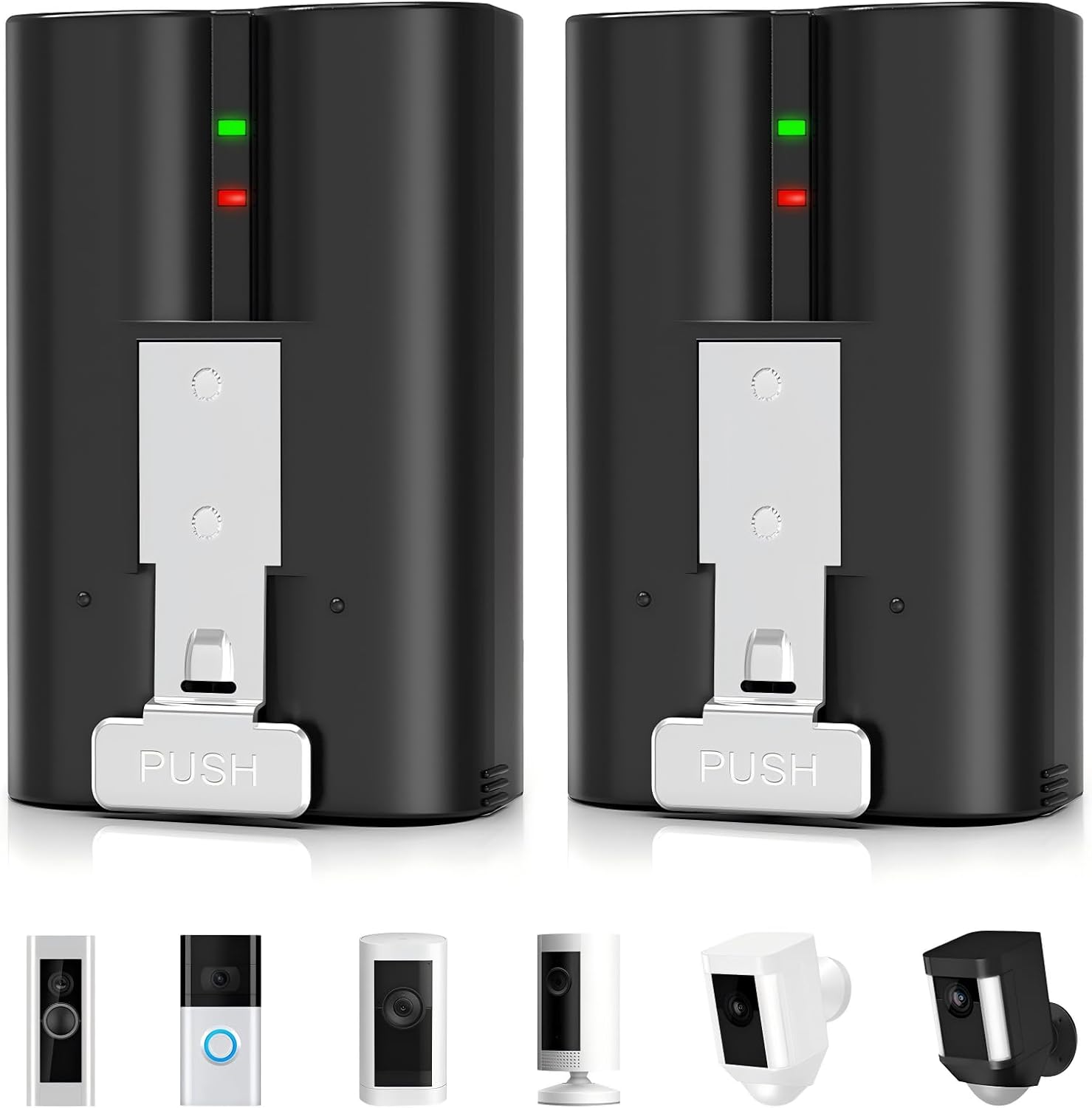
Ring Stick Up Cam Battery Gen 3
Pros
- True indoor and outdoor rated in one camera
- Integrates perfectly with Ring Video Doorbell and Ring Alarm
- Quick-release battery swaps in under a minute
- 1080p HDR handles high-contrast scenes like doorways
- Privacy zones and customizable motion sensitivity
Cons
- Ring Protect plan needed for video history beyond 60 seconds
- Night vision is black and white without Color Night Vision add-on
Price as of Feb 27, 2026 — see current price on Amazon.
The Stick Up Cam's real advantage is versatility. One camera works in your living room pointed at the front door and outside above the back porch. The weather resistance handles rain, snow, and heat without any modifications needed.
If you already have a Ring doorbell, adding Stick Up Cams creates a unified security system in the Ring app. All cameras share the same interface, shared event timelines, and linked alarms. Ring Protect Basic costs $5/month per device for 180 days of cloud history, or $10/month for all cameras with Ring Protect Plus.
Battery life runs roughly six months in normal conditions. The quick-release design means swapping the dead battery for a freshly charged spare takes about 45 seconds with no tools required.
5. Blink Outdoor 4 (Best Budget Pick)
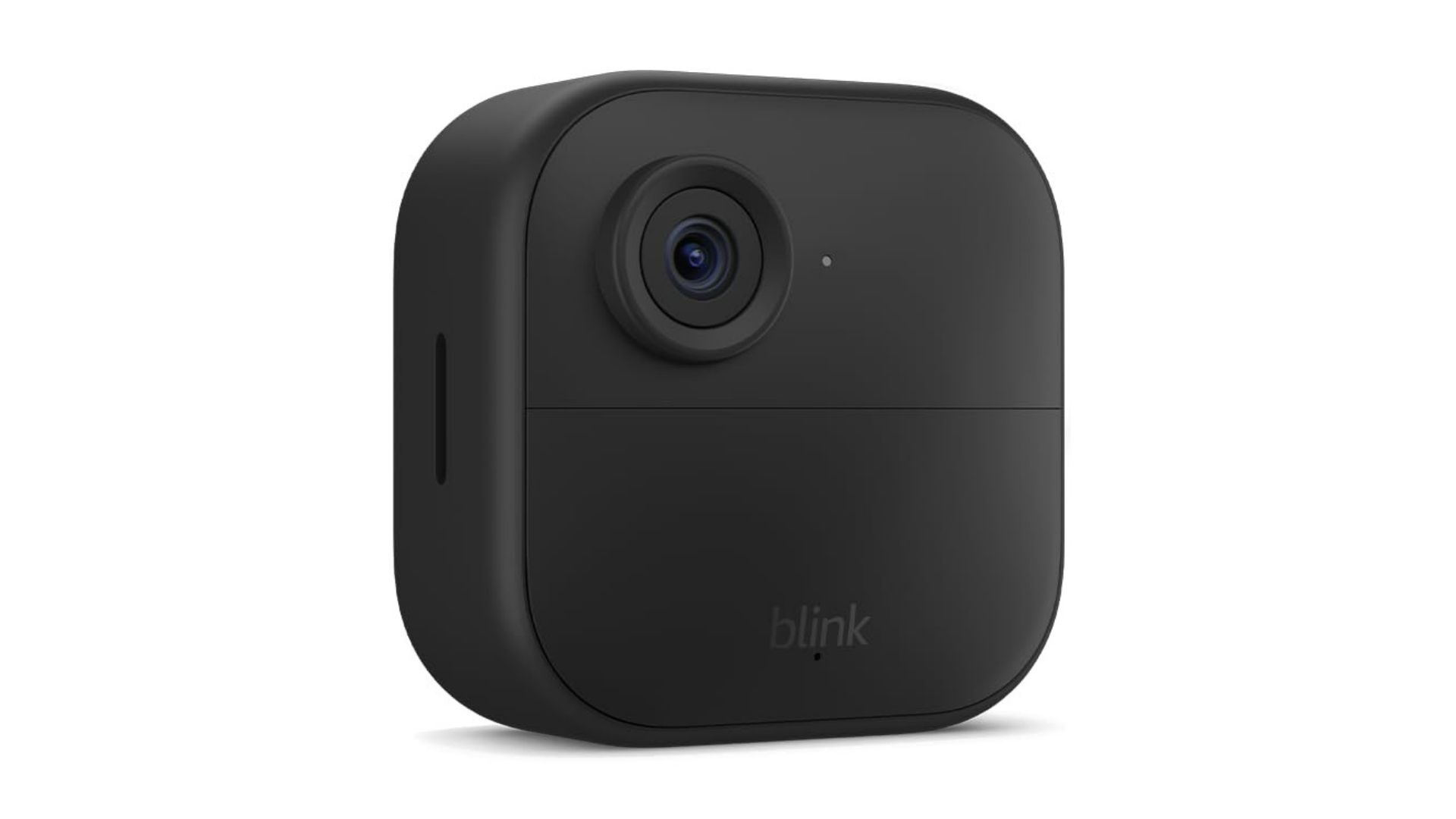
Blink Outdoor 4
Pros
- Two-year battery life on standard AA batteries
- Clean, minimal Blink app that does not overwhelm beginners
- 1080p video with improved infrared night vision vs. prior gen
- Add Blink Sync Module 2 for local storage with no subscription
- Compact and lightweight, installs in minutes
Cons
- Night vision is infrared only, no color
- Requires Blink Sync Module 2 for local storage
Price as of Feb 27, 2026 — see current price on Amazon.
Two-year battery life on standard AA batteries is the Blink Outdoor 4's headline feature, and it delivers. Most wireless cameras use proprietary rechargeable packs you remove and plug into a wall charger. The Blink runs on batteries you pick up anywhere, and they last long enough that you barely think about them.
Video quality is a real step up from the Blink Outdoor 3. The 1080p resolution is solid, and the upgraded infrared LEDs push night vision clarity noticeably further. You will not mistake a person for a shadow at 20 feet.
For truly subscription-free operation, add the Blink Sync Module 2 (sold separately, around $35) for local USB drive storage. Without it, you rely on Blink cloud plans ($3/month per camera). The camera + Sync Module bundle is often sold together and is a better value than buying separately.
What to Look for in a Wireless Security Camera
Battery Life: The Make-or-Break Spec
Battery life varies enormously by motion activity and settings. A camera rated for "six months" at the manufacturer may only last six weeks if it records 50+ clips per day. Look for cameras that let you dial down motion sensitivity and adjust recording length to stretch batteries further. The Blink Outdoor 4's two-year rating comes partly from its aggressive power management between motion events.
Solar cameras sidestep the whole conversation. As long as the panel gets a few hours of sun per day, the battery stays topped off indefinitely. They cost more upfront but pay for themselves in convenience over two or three years.
Night Vision: Color vs. Infrared
Standard infrared night vision shows black-and-white footage. You can see movement but lose detail that matters: clothing color, car color, face features. Color night vision, which the Arlo Pro 5S and Reolink Argus 4 Pro both offer, captures actual color data by using larger sensors and a faint ambient light boost. The difference in identifying someone at night is significant.
Some cameras use a spotlight for color at night, which works but announces to the subject that they are on camera. The better option is a camera that captures color without triggering a visible light.
Subscription Fees: Plan Before You Buy
Nearly every major brand now has a subscription tier. What changes is what you get for free without one:
- Arlo: 30 days cloud history free. Extended features cost $8/month per cam
- Ring: 60-second event clips free. 180-day history needs Ring Protect ($5/month/cam)
- eufy: Full local storage free with SD card, no subscription required for core features
- Blink: Cloud clips free for 60 days with limited storage. Sync Module 2 enables local storage
- Reolink: Local SD storage free. Optional cloud plans available
For true subscription-free operation, eufy and Reolink are the clearest choices, provided you install a microSD card.
WiFi Range and Connection Stability
Battery-powered cameras use more aggressive WiFi power management than wired cameras, which can cause brief disconnects in fringe signal areas. Mount them within 30-40 feet of a router or extender. If coverage is a concern, read the guide to best mesh WiFi systems before installing cameras in outbuildings or at fence lines far from the house.
Installation: What "Wireless" Actually Means
Wireless cameras still need to be physically mounted. Most use a single screw mount or a magnetic base. The magnetic mounts (Arlo, eufy) are the most flexible since repositioning requires zero tools. Screw-mount cameras like Ring and Blink are more secure but require a screwdriver to move.
For renters who cannot drill into walls, look for adhesive mounting strips or cameras that stand on their own. The Ring Stick Up Cam can sit on a shelf indoors without any mounting hardware at all.
Wireless vs. Wired Security Cameras
The choice between wireless and wired security cameras comes down to three things: placement flexibility, installation effort, and long-term reliability.
Wired cameras connect to a continuous power source and often to a local NVR (network video recorder) via ethernet. They record 24/7, never run out of battery, and provide uninterrupted coverage. The downside is the installation work: running cables through walls and ceilings, potentially hiring an electrician, and committing to fixed camera positions.
Wireless cameras can go anywhere a screw or adhesive strip can hold them. You can place cameras in outbuildings, above doors without nearby outlets, or inside apartments without landlord permission. The tradeoff is battery management and the fact that most only record motion clips rather than continuous footage.
For most people who want basic coverage of entry points, the flexibility of wireless cameras beats the permanence of wired installations. See best security cameras for all types for a broader look at all options, including wired picks.
Frequently Asked Questions
How long do wireless security camera batteries actually last?
It depends on motion activity more than the spec sheet suggests. A camera rated for six months at two recordings per day might last eight weeks if it records 40 clips per day. To maximize battery life, set motion sensitivity to medium, limit recording length to 20-30 seconds per clip, and disable features like 24/7 live view streaming that drain the battery fast.
Do wireless security cameras work without a subscription?
Yes, several of them do. eufy cameras store footage locally on a microSD card with no recurring fees. Reolink does the same. Blink cameras work subscription-free when paired with a Blink Sync Module 2 for local USB storage. Arlo and Ring both offer limited free tiers but reserve the most useful features for paid plans.
Can wireless security cameras record continuously, or only on motion?
Most wireless cameras record on motion only to preserve battery life. Continuous recording would drain even a large battery in a day or two. A few cameras, particularly solar-powered models with large battery reserves like the eufy SoloCam S340, offer extended recording windows. For true 24/7 recording, a wired camera connected to power is the right tool.
What WiFi speed do I need for wireless security cameras?
Most 1080p cameras need 2-4 Mbps upload speed per camera. 4K cameras like the Reolink Argus 4 Pro need 8-10 Mbps per camera for smooth streaming and cloud uploads. More important than raw speed is signal strength at the camera's location. Weak WiFi causes dropped connections and missed events more often than slow internet does.
Are wireless security cameras weatherproof?
The ones on this list all carry at minimum IP65 or IP67 ratings, meaning they handle rain, dust, and temperature swings from about -4F to 122F. For extreme cold climates, battery performance drops significantly below 14F, so expect shorter battery life in winter. The eufy SoloCam S340's large battery reserve helps here since it has more capacity to spare.
The Bottom Line
For most homes, the Arlo Pro 5S 2K earns its spot as the best all-around wireless security camera: color night vision, six-month battery, and compatibility with every major smart home platform. If subscription fees are a dealbreaker, the eufy SoloCam S340 delivers better value over time, with solar charging and local storage that genuinely requires no recurring payment.
The Reolink Argus 4 Pro is worth the premium if you need to cover a large, open area with one camera rather than two. The Ring Stick Up Cam Gen 3 is the obvious pick if you already own Ring devices. And the Blink Outdoor 4 remains the sharpest budget option available for two-year battery life under $75.
Pick the one that matches your actual pain point: subscription costs, battery hassle, coverage area, or upfront price.
How We Pick
We pick products by combining spec-level research, price checks, trusted third-party benchmarks, and owner sentiment from high-signal sources.
- Performance and real-world value in the category this guide targets
- Price-to-performance and deal consistency over recent pricing windows
- Build quality, reliability patterns, and known long-term issues
- Recommendation refresh cadence to keep these picks current
Author
TheTechSearch Editorial Team
Independent product reviewers & PC builders
We compare real-world specs, reviews and owner reports, price trends, and user feedback to recommend gear that actually makes sense to buy.