Best Portable Chargers 2026
The best portable chargers and power banks you can buy in 2026, from laptop-capable 25K banks to slim MagSafe picks for iPhone. Expert picks, pros and cons,...
As an Amazon Associate we earn from qualifying purchases made through our links — this doesn't affect our picks.
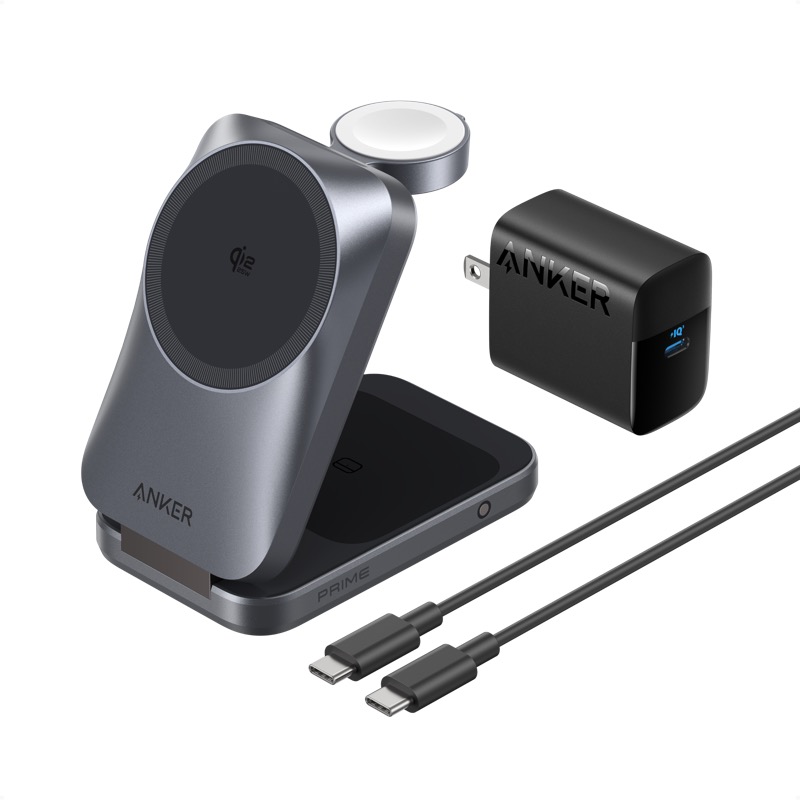
Anker Laptop Power Bank 25K, 165W
Our top recommendation for this category
Price as of Feb 28, 2026 — see current price on Amazon.
In this guide
- Our top picks at a glance
- Best for laptop charging: Anker Laptop Power Bank 25K, 165W
- Best mid-range value: Baseus 65W 20000mAh Power Bank
- Best compact: Anker Nano Power Bank 10K with Built-In USB-C Cable
- Best for iPhone: Anker MagGo Power Bank 10K Slim (MagSafe)
- How to choose a portable charger
- Bottom line
Dead battery anxiety is real. Whether you're on a long flight, a day of back-to-back meetings, or just too far from an outlet, the right portable charger makes the difference between getting through your day and scrambling for a power strip. The market in 2026 is better than ever: USB-C is universal, wattages have climbed to laptop-level outputs, and MagSafe wireless charging is actually reliable now.
Here are the portable chargers I'd actually recommend.
Our top picks at a glance
| Power Bank | Capacity | Max Output | Best For | Price | |
|---|---|---|---|---|---|
| Anker Laptop Power Bank 25K | 25,000mAh | 165W | Laptop charging | $109 | Check Price |
| Baseus 65W 20000mAh | 20,000mAh | 65W | Best value mid-range | $45 | Check Price |
| Anker Nano Power Bank 10K | 10,000mAh | 45W | Everyday carry / compact | $30 | Check Price |
| Anker MagGo Power Bank 10K Slim | 10,000mAh | 15W wireless | iPhone MagSafe users | $65 | Check Price |
Best for laptop charging: Anker Laptop Power Bank 25K, 165W
Anker Laptop Power Bank 25K, 165W
Pros
- 165W output actually charges most laptops at full speed
- Built-in USB-C cable means one less thing to carry
- Three USB-C ports charge laptop + phone + earbuds simultaneously
- Smart display shows precise battery percentage
Cons
- Noticeably heavy at 1.4 lbs, you'll feel it in a bag
- Overkill if you only charge phones
- Pricier than simpler phone-focused banks
Price as of Feb 28, 2026 — see current price on Amazon.
This is the power bank for people who need to charge a laptop on the go. The Anker 25K hits 165W total output (up to 140W on the primary USB-C port), which is enough to charge a MacBook Pro or most Windows ultrabooks at close to wall-speed. That's a meaningful upgrade from the 100W cap that held back previous generations.
What makes it practical instead of just powerful is the built-in USB-C cable. One fewer cable to pack is a bigger quality-of-life win than it sounds. There's also a retractable cable included, plus three USB-C ports and one USB-A, so you can run multiple devices simultaneously. The smart display shows exact percentages rather than vague LED dots, which makes it easier to plan your power budget before a long flight.
The downsides are real. At 1.4 pounds it's genuinely heavy, and you won't forget it's in your bag. But if you're the kind of person who leaves the house with a laptop and won't have outlet access for hours, this is the right call.
Who it's for: Remote workers, frequent travelers, and anyone who actually needs to charge a laptop off-grid. Pairing this with a good laptop? See our best laptops for programming guide.
Best mid-range value: Baseus 65W 20000mAh Power Bank
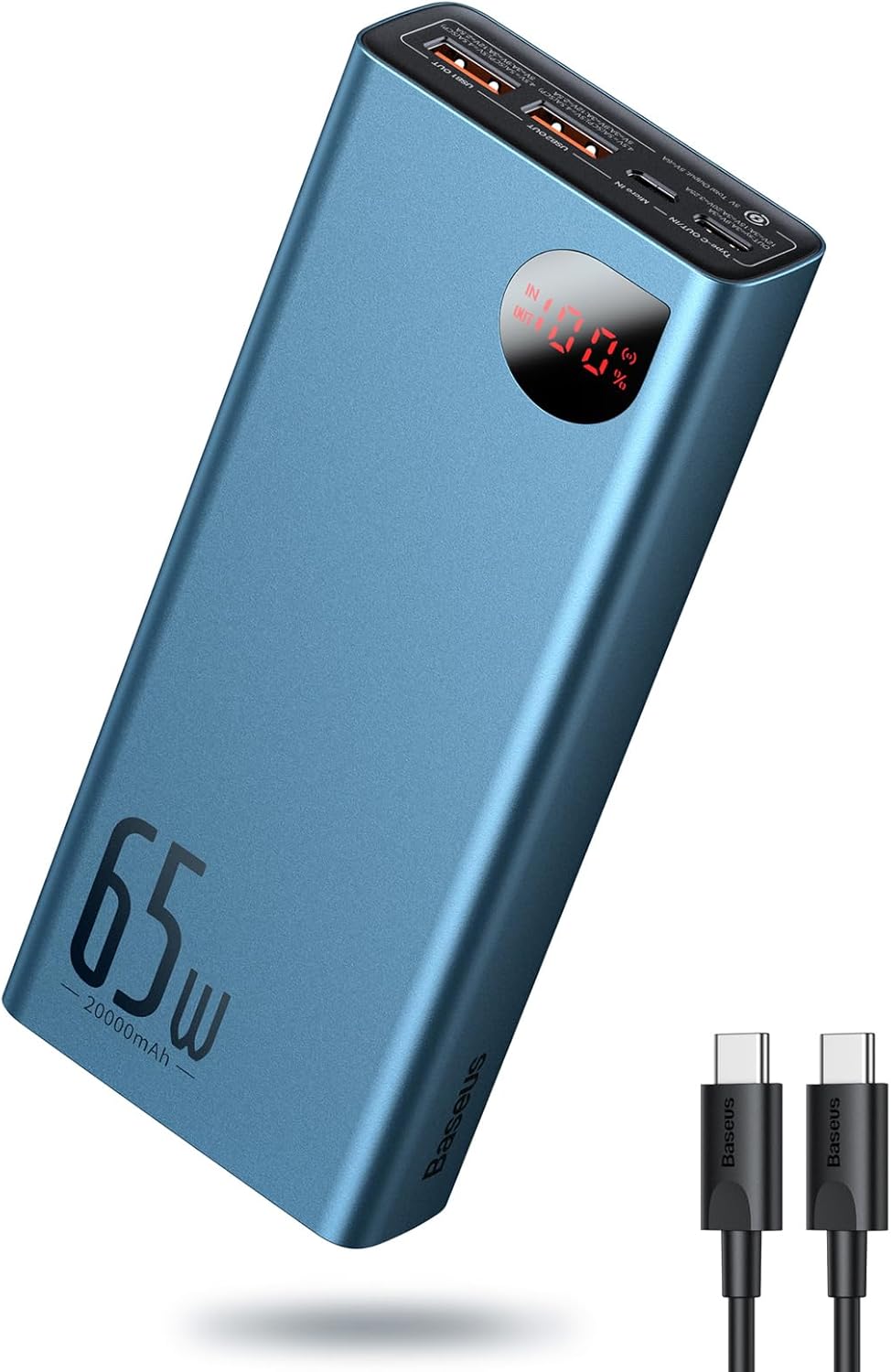
Baseus 65W 20000mAh Power Bank
Pros
- 65W USB-C output handles ultrabooks and phones fast
- 20,000mAh capacity for multi-day trips
- Digital display shows exact charge remaining
- Great price for the capacity and output you get
Cons
- 65W isn't quite enough for power-hungry 15" laptops at full load
- Slightly bulky for jacket-pocket carry
- Less name recognition than Anker in the US market
- Baseus app features are optional and rarely needed
Price as of Feb 28, 2026 — see current price on Amazon.
If the Anker 25K is more power bank than you need, or more expensive than you want to spend, the Baseus 65W 20000mAh is the smart middle ground. At 20,000mAh it has plenty of capacity to keep a phone topped off for two or three days of heavy use, and 65W on the USB-C output means it can charge thin-and-light laptops like the MacBook Air or Dell XPS 13 at a useful rate.
The digital display is a nice touch at this price point. Most budget banks hide behind cryptic LED indicators; this one shows you a real percentage. PPS support means compatible phones like recent Samsung Galaxy devices get the fastest possible charging speed.
Where it falls short: 65W isn't enough to keep a demanding laptop battery topped up under heavy load. You'll gain charge while using it lightly, but if you're running Premiere Pro or a heavy game on a 15-inch machine, 65W won't keep up. For an ultrabook, iPad, or phone, though, it's excellent.
Who it's for: Travelers and students who want mid-range capacity at a non-insane price.
Best compact: Anker Nano Power Bank 10K with Built-In USB-C Cable
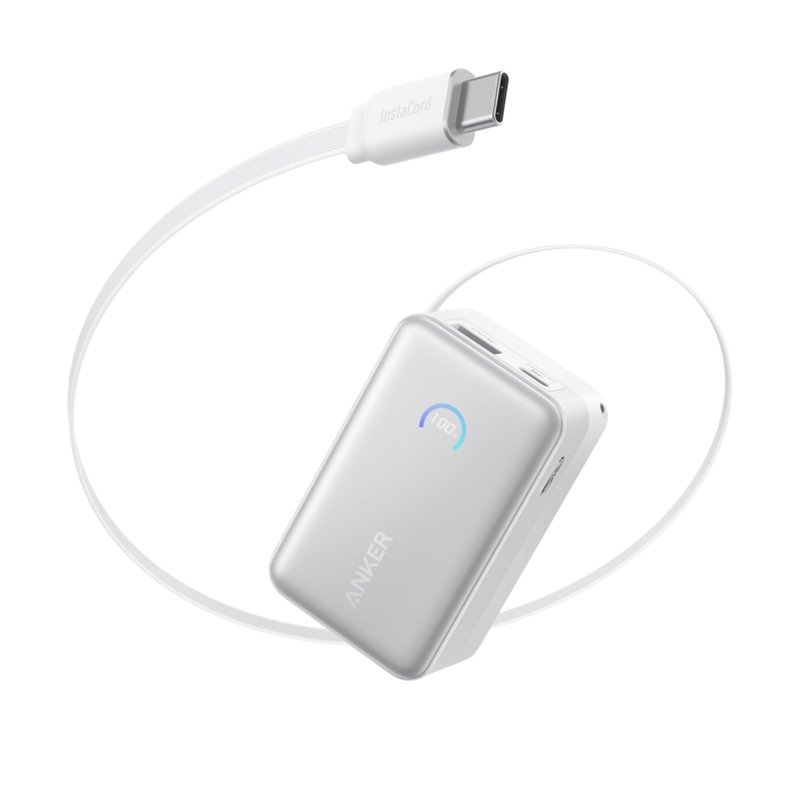
Anker Nano Power Bank 10K (30W, Built-In USB-C)
Pros
- Built-in USB-C cable (no extra cable needed)
- Compact enough for a front pocket or small bag
- 45W output recharges your phone very quickly
- Doubles as a pass-through charger with wall adapter
Cons
- 10,000mAh won't fully charge most modern phones twice
- Built-in cable isn't replaceable if it wears out
- No USB-A port for older cables
- Can get warm during rapid charging
Price as of Feb 28, 2026 — see current price on Amazon.
The Anker Nano 10K is what I'd recommend to someone who wants to stop thinking about charging accessories entirely. Its built-in USB-C cable removes the "did I pack a cable?" anxiety loop. The compact form factor means it actually fits in a jeans pocket or the small compartment of a daypack. And 45W fast charging means your phone goes from 20% to 80% in under 45 minutes.
At 10,000mAh you're looking at roughly 1.5–2 full iPhone 16 charges, or a bit more if you're topping up rather than charging from dead. That's enough for a full day of heavy use. The pass-through feature means you can plug it into the wall via USB-C and charge both it and your phone simultaneously from a single outlet, which is genuinely useful in airports.
The built-in cable is a double-edged sword. It's convenient until it isn't: if the cable wears out or frays over time, there's no replacing it without replacing the whole unit.
Who it's for: Daily commuters, travelers who want to pack light, anyone tired of hunting for cables.
Best for iPhone: Anker MagGo Power Bank 10K Slim (MagSafe)
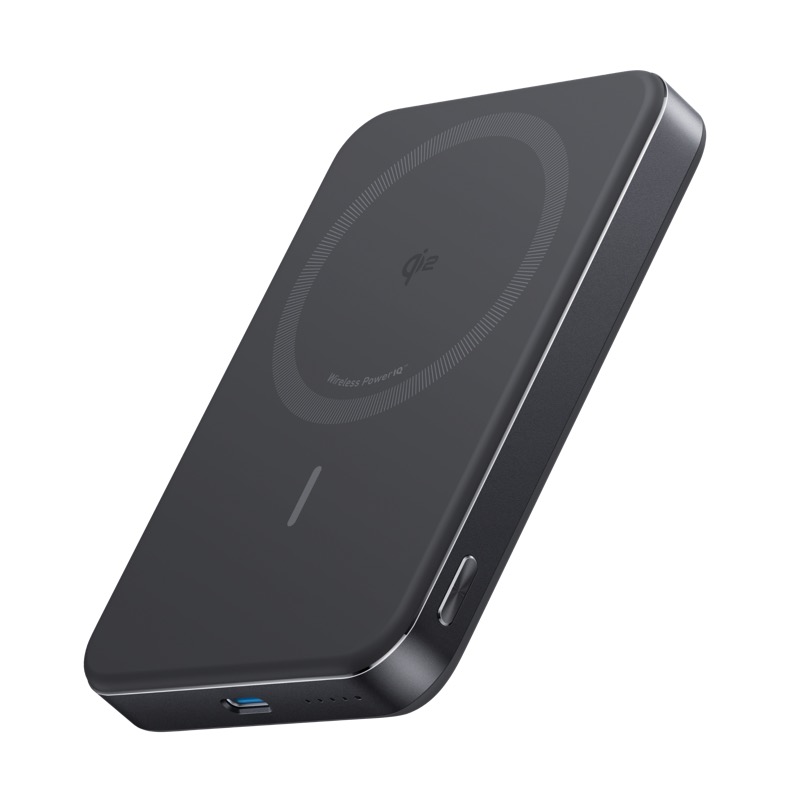
Anker MagGo Power Bank 10K Slim
Pros
- MagSafe/Qi2 magnetic attachment means it stays put on iPhone
- 15W wireless charging is the fastest wireless available for iPhone
- Slim profile doesn't add much bulk to your phone
- USB-C port for wired charging when you need speed
Cons
- Only works magnetically with iPhone 12 and later (MagSafe)
- 10,000mAh is enough for 1-2 charges, not a multi-day trip
- More expensive than non-MagSafe alternatives with same capacity
- Wireless charging is slower than wired regardless
Price as of Feb 28, 2026 — see current price on Amazon.
If you're deep in the iPhone ecosystem and tired of fumbling with cables when you just need a quick top-up, the Anker MagGo Slim solves that friction elegantly. Snap it to the back of your iPhone 12 or later, and it starts charging at 15W wirelessly, no cable, no dock, no aligning. The magnetic connection keeps it attached securely whether you're walking around or riding in a car.
The slim profile is the real design win here. Many other MagSafe banks add noticeable bulk, making the phone feel like a brick. The MagGo Slim keeps things reasonable; it adds a bit of heft but doesn't feel awkward in hand or pocket.
That said, wireless charging always has a ceiling. If you need to go from 5% to 80% fast, plug in via USB-C instead of relying on wireless. The MagSafe works best as a passive top-up companion: clip it on, pocket both, let it quietly add charge throughout the day.
Who it's for: iPhone users who want the convenience of MagSafe wireless and don't want to carry a separate charging cable. For home and desk charging, see our best wireless chargers roundup.
How to choose a portable charger
Capacity (mAh): For phones and earbuds, 10,000mAh is plenty for a day trip. For multi-day travel or laptop charging, 20,000–25,000mAh makes more sense.
Output wattage: For phones, 30–45W fast charges in under an hour. For laptops, you need 65W minimum for ultrabooks, 100W+ for anything with a dedicated GPU.
Number of ports: If you're charging multiple devices at once, look for at least two USB-C ports. Having a USB-A as backup for older accessories is still useful.
Weight and form factor: A 25,000mAh bank weighs around 1.4 lbs. A 10,000mAh compact bank weighs under 7oz. Know what you're willing to carry.
MagSafe vs. standard wireless: Only worth it if you have an iPhone 12 or later. On other phones, standard wireless charging (Qi) works but typically maxes out at 7.5–10W, slower than wired.
USB-C accessories: If you're building out a travel or desk setup, our best USB-C hubs and docks guide covers everything from compact travel hubs to full-desk docks.
Bottom line
For most people, the Anker Nano 10K covers daily needs with zero cable fuss. If you travel with a laptop and need serious output, the Anker Laptop Power Bank 25K is the right tool. The Baseus 65W hits the value sweet spot for multi-day trips. And if you're an iPhone user who hates cables, the Anker MagGo Slim is the cleanest solution available.
How We Pick
We pick products by combining spec-level research, price checks, trusted third-party benchmarks, and owner sentiment from high-signal sources.
- Performance and real-world value in the category this guide targets
- Price-to-performance and deal consistency over recent pricing windows
- Build quality, reliability patterns, and known long-term issues
- Recommendation refresh cadence to keep these picks current
Author
TheTechSearch Editorial Team
Independent product reviewers & PC builders
We compare real-world specs, reviews and owner reports, price trends, and user feedback to recommend gear that actually makes sense to buy.